


Subtotal $0.00

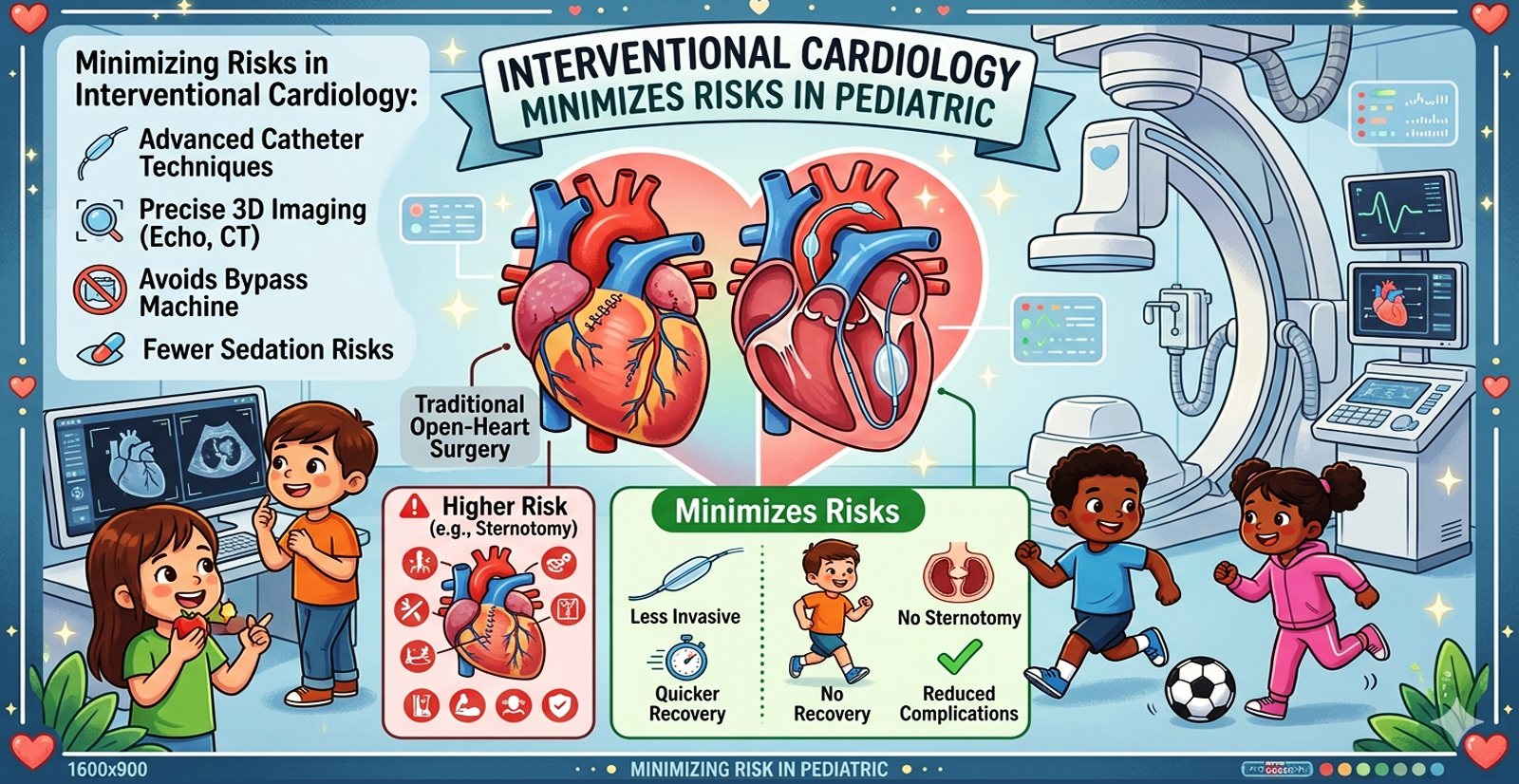
Table of Contents
Toggle‘How Interventional Cardiology Minimizes Risks in Pediatric Cases’ – a detailed guide by Dr. Debasree Gangopadhyay, pediatric cardiologist (MD), Narayana Hospital, Mukundapur, Kolkata.
Introduction
When a child is diagnosed with a heart condition, it can be frightening for parents. In earlier times, most pediatric heart problems required open-heart surgery, which involved higher risks, longer hospital stays, and a difficult recovery process. Today, medical science has moved forward in a big way. One of the most important advancements is interventional cardiology, which focuses on treating heart conditions using minimally invasive techniques.
Understanding how interventional cardiology minimizes risks in pediatric cases can help parents feel more confident about modern treatment options. Instead of major surgery, many procedures can now be performed using small tubes called catheters, which reduces pain, lowers complications, and speeds up recovery for children.
In a growing medical hub like Kolkata, access to advanced care is now easier than ever. With experienced specialists in Intervention Cardiology in Kolkata, families can consult a skilled Interventional Cardiologist in Kolkata, along with an expert Pediatric Cardiologist in Kolkata or a trusted Child Heart Doctor in Kolkata, to ensure the best possible care for their child.
This blog will help you understand how interventional cardiology works, why it is safer for children, and how it is changing the way pediatric heart conditions are treated today.
Understanding Intervention Cardiology
What is Interventional Cardiology?
Interventional cardiology is a branch of heart care that uses catheter-based procedures instead of traditional surgery. A thin tube called a catheter is inserted through a small incision, usually in the groin or arm, and guided to the heart.
These procedures are widely used in children to:
- Diagnose heart conditions
- Repair defects without surgery
- Improve blood flow
- Treat valve problems
Unlike open-heart surgery, these procedures do not require large cuts in the chest.
Common Pediatric Heart Conditions Treated
An experienced Pediatric Cardiologist in Kolkata can treat several heart conditions using interventional procedures, including:
- Atrial Septal Defect (ASD): A hole between the upper chambers of the heart.
- Ventricular Septal Defect (VSD): A hole between the lower chambers of the heart.
- Patent Ductus Arteriosus (PDA): A condition where a blood vessel fails to close after birth.
- Pulmonary Valve Stenosis: Narrowing of the pulmonary valve affecting blood flow.
These conditions, which once required open-heart surgery, can now often be treated through catheter-based procedures.
Why Pediatric Cases Need Special Care
When it comes to heart problems, children need a very different approach compared to adults. Their bodies are still growing, their organs are more delicate, and many heart conditions in children are present from birth. That is why pediatric heart care requires extra attention, precision, and expertise.
Unlike adults, children cannot always clearly explain their symptoms. A small sign like poor weight gain, fast breathing, or fatigue during play can indicate an underlying heart issue. A skilled Child Heart Doctor in Kolkata understands these subtle signs and can diagnose problems early.
Another important factor is that children’s hearts are still developing. Any treatment must be planned carefully so it does not affect future growth. This is where the role of a trained Pediatric Cardiologist in Kolkata becomes crucial. They focus not only on treating the condition but also on ensuring the child’s long-term heart health.
Procedures used in adults cannot always be directly applied to children. Pediatric cases require specially designed equipment, smaller devices, and highly controlled techniques. An experienced Interventional Cardiologist in Kolkata uses advanced methods in Intervention Cardiology in Kolkata to perform safe, minimally invasive procedures suited for young patients.
Children also respond differently to medications, anesthesia, and recovery processes. They need close monitoring before, during, and after any procedure. Emotional care is equally important, as hospital visits and treatments can be stressful for both the child and the parents.
Overall, pediatric heart care is not just about treating a disease. It is about understanding the unique needs of a growing child and providing safe, gentle, and effective treatment. With the right expertise in Intervention Cardiology in Kolkata, families can feel confident that their child is receiving the best possible care with minimal risk.
Why Minimizing Risk is Important in Children
Children are not just small adults. Their bodies respond differently to treatments. Even a small complication can affect their growth and development.
That’s why a Child Heart Doctor in Kolkata focuses on
- Reducing physical trauma
- Avoiding long hospital stays
- Lowering the risk of infection
- Ensuring faster recovery
Interventional cardiology helps achieve all these goals.
How Interventional Cardiology Minimizes Risks in Pediatric Case
- Avoids Major Surgery: The biggest advantage is that many procedures can now be done without open-heart surgery.
- No large chest incision
- No stopping the heart
- Lower risk of complications
Many defects like ASD (hole in the heart) or PDA can be closed using devices delivered through a catheter.
- Smaller Incisions, Less Trauma: Interventional procedures use tiny incisions instead of large cuts.
This means:
- Less pain for the child
- Minimal blood loss
- Lower infection risk
Modern techniques even use camera-guided tools to treat heart defects through very small openings.
- Faster Recovery Time: Children recover much faster compared to surgery.
- Many go home the same or next day
- Resume normal activities within days
- Reduced hospital stay
This significantly reduces both physical and emotional stress for children and parents.
- Lower Risk of Complications: With improved imaging and advanced devices, interventional cardiology offers:
- Better precision
- Reduced surgical complications
- Lower mortality in many cases
Modern techniques allow doctors to treat complex conditions with relatively low risk compared to traditional surgery.
- Reduced Need for Multiple Surgeries: Children with congenital heart disease often need repeated procedures.
Interventional cardiology helps:
- Reduce the number of surgeries over a lifetime
- Delay or even avoid open-heart surgery
This is especially important for long-term heart health.
- Advanced Imaging Improves Safety: Today’s procedures use high-end imaging like:
- 3D echocardiography
- MRI
- CT scans
These technologies allow doctors to:
- See the heart in detail
- Plan procedures accurately
- Avoid damage to surrounding structures
This directly reduces procedural risks.
- Suitable for Even Complex Cases: Earlier, only simple defects could be treated without surgery. Now, even complex conditions are managed through interventional techniques.
Examples include:
- Valve repair (balloon valvuloplasty)
- Stenting of narrowed vessels
- Closure of complex heart defects
The field has expanded rapidly with better success rates.
- Hybrid Procedures for Better Outcomes: In some cases, doctors combine:
- Surgery + Interventional cardiology
This is called a hybrid approach.
Benefits include:
- Fewer procedures
- Lower overall risk
- Better outcomes in complex heart diseases
Common Pediatric Conditions Treated with Interventional Cardiology
A skilled Interventional Cardiologist in Kolkata can treat many conditions, such as
- Atrial Septal Defect (ASD)
- Ventricular Septal Defect (VSD)
- Patent Ductus Arteriosus (PDA)
- Pulmonary valve stenosis
- Narrowed blood vessels
- Arrhythmias
Many of these conditions can now be treated without open-heart surgery.
Advanced Techniques Used in Pediatric Interventional Cardiology
Modern Intervention Cardiology in Kolkata includes several advanced techniques:
Device Closure
Special devices are used to close holes in the heart without surgery.
Balloon Angioplasty
A small balloon is inflated to open narrowed valves or arteries.
Stent Placement
Tiny mesh tubes are placed to keep blood vessels open.
These techniques are designed to be child-friendly and highly effective.
Are There Any Risks?
While interventional cardiology is safer, it is not completely risk-free.
Possible risks include:
- Bleeding at catheter site
- Infection
- Device-related complications
- Rare heart rhythm problems
However, with modern techniques and experienced doctors, these risk possibilities are significantly lower than traditional surgery.
Role of a Skilled Child Heart Specialist
The success of any procedure depends largely on the expertise of the doctor.
A qualified Interventional Cardiologist in Kolkata works closely with a Pediatric Cardiologist in Kolkata to:
- Diagnose accurately
- Plan the safest procedure
- Monitor recovery carefully
Choosing the right specialist can make a big difference in treatment outcomes.
How to Choose the Right Child Heart Doctor in Kolkata
Choosing the right Child Heart Doctor in Kolkata is an important decision for your child’s health. You should look for a doctor who has strong experience in treating children with heart conditions, not just general heart care. A qualified Interventional Cardiologist in Kolkata with pediatric expertise can offer safer and more effective treatment using modern techniques.
It is also important to check whether the doctor is associated with a well-equipped hospital that offers advanced facilities for Intervention Cardiology in Kolkata. Access to modern technology helps in accurate diagnosis and minimally invasive procedures.
Take time to review the doctor’s experience, patient feedback, and success in handling similar cases. A good doctor will communicate clearly, explain treatment options in simple terms, and make both you and your child feel comfortable.
An experienced Child Heart Doctor in Kolkata ensures that your child receives safe and effective care.
Future of Interventional Cardiology in Pediatric Care
The future of pediatric heart treatment is moving in a very positive direction. With continuous advancements in technology, Intervention Cardiology in Kolkata is becoming safer, more precise, and more effective for children.
New devices are now smaller and specially designed for infants and young patients, allowing an Interventional Cardiologist in Kolkata to treat complex heart conditions with minimal risk. Advanced imaging techniques are also improving accuracy, helping doctors perform procedures with better planning and confidence.
In the coming years, we can expect more minimally invasive treatments that will further reduce the need for open-heart surgery. Faster recovery, shorter hospital stays, and improved long-term outcomes will become more common.
At the same time, a skilled child heart doctor in kolkata will continue to play a key role in early diagnosis and guiding families toward the right treatment at the right time.
Overall, the future of interventional cardiology in pediatric care looks promising, offering safer solutions and better quality of life for children with heart conditions.
Safety Measures Followed
Top hospitals offering Intervention Cardiology in Kolkata follow strict safety protocols:
- Advanced monitoring systems
- Sterile operating environments
- Emergency backup support
- Experienced medical teams
These measures further reduce risks and improve patient safety.
Long-Term Benefits for Children
Interventional cardiology not only treats the condition but also supports long-term health.
Children benefit from:
- Normal growth and development
- Improved heart function
- Better quality of life
- Reduced need for future surgeries
Early treatment by a skilled Pediatric Cardiologist in Kolkata ensures a healthier future.
When Should You Consult a Specialist?
Parents should not ignore symptoms like:
- Fast breathing
- Poor weight gain
- Fatigue during play
- Bluish skin (cyanosis)
If you notice these signs, consult a child heart doctor in Kolkata immediately. Early diagnosis leads to safer and more effective treatment.
Conclusion
Modern medicine has made it possible to treat pediatric heart conditions with minimal risk. Interventional Cardiology Minimizes Risks in Pediatric Case by offering a safer, less invasive, and highly effective alternative to traditional surgery.
With expert care from an experienced Interventional Cardiologist in Kolkata and proper guidance from a Pediatric Cardiologist in Kolkata, children can recover quickly and lead healthy lives.
For parents, this approach brings peace of mind, knowing that their child is receiving advanced care with the lowest possible risk.
Early care, the right expertise, and modern technology together ensure that children can live healthier and happier lives.
FAQ's on Interventional Cardiology: Minimizes Risks in Pediatric Cases
Discover how interventional cardiology is transforming pediatric heart care by offering safer, minimally invasive alternatives to traditional open-heart surgery. The following frequently asked questions address common concerns parents have regarding the benefits, safety, and recovery processes associated with these advanced catheter-based treatments for congenital heart defects.
What is Interventional Cardiology in pediatric care?
Interventional cardiology is an advanced branch of heart care that uses catheter-based procedures—inserting a thin tube through a small incision in the groin or arm—to treat heart issues. Unlike traditional open-heart surgery, it allows doctors to diagnose conditions, repair defects, and improve blood flow without making large cuts in a child's chest.
What common pediatric heart conditions can be treated using this method?
Skilled pediatric cardiologists use interventional procedures to treat several conditions, including Atrial Septal Defect (ASD), Ventricular Septal Defect (VSD), Patent Ductus Arteriosus (PDA), and Pulmonary Valve Stenosis. These conditions once required open-heart surgery but can now often be managed minimally invasively.
How does interventional cardiology minimize risks for children?
Interventional cardiology significantly minimizes risks by avoiding major open-heart surgery and stopping of the heart. It involves smaller incisions leading to less pain, minimal blood loss, and a lower infection risk. Children also experience much faster recovery times, often going home the same or next day, and a reduced need for multiple surgeries over their lifetime.
Are there any risks involved in pediatric interventional cardiology?
While the procedures are substantially safer than traditional surgery, they are not completely risk-free. Possible minor risks include bleeding at the catheter site, infection, device-related complications, and rare heart rhythm problems. However, modern techniques and experienced specialists keep these possibilities significantly lower than traditional surgical methods.
When should parents consult a child heart specialist?
Parents should consult a pediatric cardiologist immediately if they notice subtle warning signs in their child such as unusually fast breathing, poor weight gain, extreme fatigue during playtime, or a bluish tint to the skin (cyanosis). Early diagnosis leads to safer and more effective treatment.
Disclaimer: This article is for informational purposes only and does not constitute medical advice. Always consult with a qualified cardiac specialist for diagnosis and treatment related to your personal health condition.
Read Also:
- The Role of Pediatric Cardiologist for Congenital Muscular Dystrophy (CMD) Treatment in Kolkata
- Pediatric Echocardiography Test in Kolkata: Purpose, Procedure, centre and Top Echocardiography Doctor
- What to Expect During a Pediatric Heart Catheterization
- Heart Health Tips for Children from an Interventional Cardiologist in Kolkata
- Congenital Heart Disease in Children: Causes, Symptoms, and Treatment Options in 2026
- Living Well with Heart Valve Disease: Hope for Children and Families
- Patent Ductus Arteriosus (PDA): Causes, Symptoms and Treatment in Kolkata
- SVT in Children: What Parents Need to Know About Supraventricular Tachycardia
- Rheumatic Heart Disease in Kids: Prevention and Care
- Congenital Heart Valve Defects: Early Signs and Modern Solutions
- Heart Valve Problems in Kids: Symptoms, Diagnosis, and Treatment (2026)
- Ventricular Septal Defect (VSD) in Children – Symptoms, Causes, Types & Treatments in 2025
- Understanding Heart Valve Disease in Children: A Parent’s Guide in 2025
- Atrial Septal Defect (ASD) – Symptoms, Causes, Types & Treatments in 2025
- Common Heart Conditions in Children: A Doctor’s Guide in 2025
- How Safe Are Cardiac Catheterization Procedures for Children in 2025?
- Essential Guide to Newborn Heart treatment in Kolkata in 2025
- Comprehensive Pediatric Heart Check Up: What’s Included & Why it’s Worth It

Dr. Debasree Gangopadhyay is a highly respected pediatric cardiologist based in Kolkata, India, specializing in the diagnosis and treatment of heart conditions in children. With a compassionate approach and a commitment to excellence, Dr. Gangopadhyay has made significant contributions to the field of pediatric cardiology. Her expertise includes managing congenital heart defects, arrhythmias, and other cardiovascular conditions in young patients. Dr. Gangopadhyay is dedicated to providing personalized care and staying updated with the latest advancements in pediatric cardiology. She is passionate about educating families on heart health and actively participates in research and community outreach programs.
Comments are closed