


Subtotal $0.00

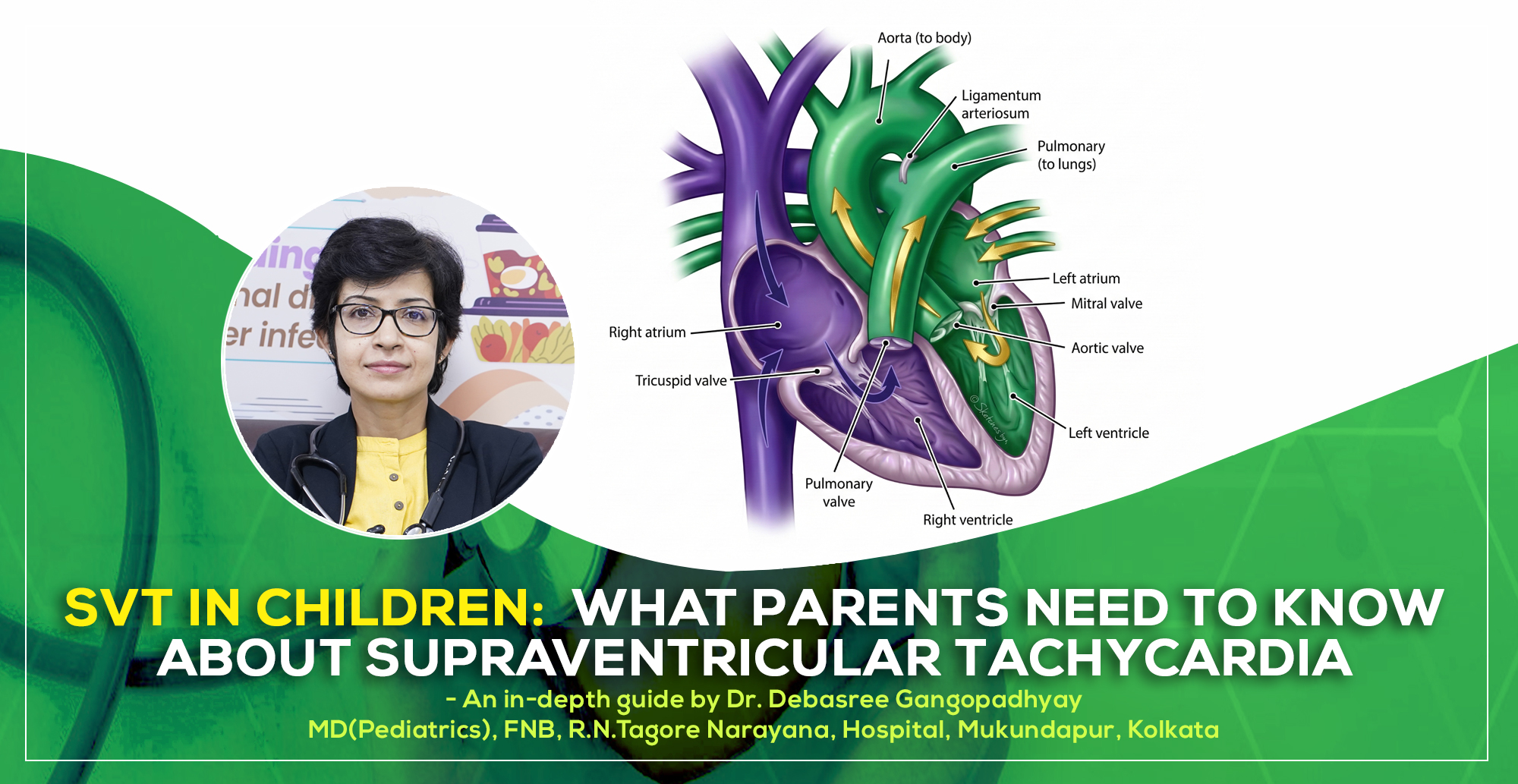
Table of Contents
ToggleA detailed discussion on ‘SVT in Children: What Parents Need to Know About Supraventricular Tachycardia’ by Dr. Debasree Gangopadhyay, pediatric cardiologist (MD), Narayana Hospital, Mukundapur, Kolkata.
Introduction
When a child’s heart starts beating much faster than normal, it can be frightening for any parent. Many families first hear the term Supraventricular Tachycardia (SVT) in Children during a sudden doctor visit or emergency check-up. SVT is one of the most common pediatric arrhythmias in Children, and while it is often treatable, early understanding is very important. Knowing what SVT is, why it happens, and how it affects children can help parents stay calm and make the right decisions at the right time.
This blog is written to give parents clear and simple information about SVT, from early warning signs to diagnosis and treatment options. It also explains when you should consult a specialist, such as an experienced pediatric cardiologist in Kolkataor a trustedbaby heart doctor in Kolkata, for proper care and guidance. Whether your child has already been diagnosed or you are simply looking to stay informed, this guide aims to answer your concerns and support you every step of the way.
Understanding SVT in Children
Supraventricular Tachycardia (SVT) is a type of rapid heart rhythm that starts above the heart’s lower chambers. In children, it is one of the most common forms of abnormal heart rhythm, also referred to as a Pediatric Arrhythmia. The heartbeat can suddenly speed up to 200 beats per minute or more, far above the normal rate for the age.
SVT is not the same as a normal fast heartbeat that comes from exercise, fear, or fever. In SVT, the heart rhythm is abnormally fast because of a miscommunication within the heart’s electrical system.
Although SVT can happen at any age, it is most often seen in infants and young children. The condition is usually not life-threatening, but it can be uncomfortable and requires evaluation and treatment by a specialist, such as a pediatric cardiologist.
What Causes SVT in Children
Understanding why SVT happens can help parents feel more in control. The heart has a natural pacemaker called the sinoatrial (SA) node, which sends electrical signals that tell the heart when to beat. In SVT, there’s a disruption in this electrical system.
The heart has its own electrical system that controls how fast it beats. In SVT, there is an extra electrical pathway or a problem with the normal pathway that makes the heart beat too quickly.
Common causes include:
- Accessory pathways – these are extra electrical connections in the heart that can cause short circuits.
- Wolff-Parkinson-White (WPW) syndrome – a specific type of accessory pathway seen in some children.
- Automaticity issues – tiny areas of heart tissue fire electrical signals too often.
In many children, SVT occurs without any other structural heart problem. But sometimes it can be associated with congenital heart defects. In other cases, SVT episodes can be triggered by specific factors like fever, dehydration, stress, caffeine consumption, or certain medications. However, many times episodes occur without any identifiable trigger, which can be frustrating for parents trying to prevent them.
Signs and Symptoms of SVT in Children
Spotting SVT in your child can be challenging because symptoms vary depending on the child’s age and their ability to communicate what they’re feeling.
Some common symptoms include:
Symptoms in Infants
Babies can’t tell you when something feels wrong, which makes recognizing SVT in infants particularly difficult. Watch for these signs:
- Irritability or excessive fussiness
- Poor feeding or refusing to eat
- Rapid breathing
- Pale skin color
- Lethargy or decreased activity
- Sweating during feeding
In infants and toddlers, SVT episodes may be harder to recognize. A baby with SVT might suddenly become very still, seem uncomfortable, or have rapid breathing. Some episodes stop on their own, but others may last for minutes or longer.
Symptoms in Older Children
Children who can communicate their feelings might describe the following:
A sudden sensation of their heart racing or pounding
- Chest discomfort or pain
- Dizziness or lightheadedness
- Shortness of breath
- Fatigue or weakness
- Feeling anxious or panicky
A key sign of SVT is that it often begins without warning and can stop just as suddenly. Many children say it feels like their heart is racing, fluttering, or beating very hard in their chest.
When to Contact a Doctor
You should seek medical advice if your child:
- Has a heart rate that seems unusually fast for no clear reason
- Appears weak, dizzy, or faint during an episode
- Has trouble breathing, chest discomfort, or severe palpitations
- Has been diagnosed with a heart condition and shows new or worsening symptoms
If you are in Kolkata and need specialized care, seeing a Pediatric Cardiologist in Kolkata or a Baby Heart Doctor in Kolkata is important. These doctors are trained to diagnose and manage heart rhythm disorders in children.
Types of Pediatric Arrhythmias in Children
SVT is just one type of arrhythmia that can affect children. Understanding the broader category of pediatric arrhythmias in children helps put SVT in context.
Supraventricular Tachycardia
As we’ve discussed, SVT is characterized by a rapid heart rate originating above the ventricles. It’s the most common type requiring treatment in children.
Other Common Arrhythmias
Beyond SVT, children may experience:
- Premature beats: Extra heartbeats that occur earlier than normal, often harmless
- Bradycardia: An abnormally slow heart rate
- Ventricular tachycardia: A more serious condition where rapid beats originate in the lower chambers
- Atrial fibrillation or flutter: Irregular, often rapid heart rhythms in the upper chambers (less common in children)
Differences Between SVT and Other Heart Rhythm Disorders
What set SVT apart are its characteristic sudden onset and termination, the heart rate typically being very fast but regular, and its origin being above the ventricles. While other arrhythmias might cause irregular beats or slower rates, SVT is distinctly rapid and rhythmic.
When to Seek Immediate Medical Attention
While most SVT episodes resolve on their own or with simple techniques, certain situations require immediate emergency care:
- The child loses consciousness or faints
- Chest pain becomes severe
- Breathing becomes extremely difficult
- The child appears very unwell or their lips turn blue
- The episode lasts longer than usual or doesn’t respond to home management techniques you’ve been taught.
Don’t hesitate to call emergency services or rush to the nearest hospital if you’re concerned. It’s always better to be cautious when it comes to your child’s heart.
How SVT Is Diagnosed
Diagnosis of SVT often starts with a detailed medical history and physical exam.
If you suspect your child has SVT, the journey to diagnosis typically involves several steps.
Physical Examination
Your doctor will start by taking a detailed medical history and performing a physical exam. They’ll listen to your child’s heart, check their pulse, and ask about the symptoms, including when they occur, how long they last, and what seems to trigger them.
Electrocardiogram (ECG/EKG)
This is the primary diagnostic tool for SVT. An ECG is a painless test that records the electrical activity of the heart. Small stickers (electrodes) are placed on your child’s chest, and the machine creates a graph showing the heart’s rhythm. If your child is having an episode during the test, it can confirm SVT immediately.
The challenge is that SVT comes and goes, so the heart might be in normal rhythm during the appointment. This is why additional monitoring might be needed.
Holter Monitor
A Holter monitor is a portable ECG device that your child wears for 24 to 48 hours (sometimes longer). It continuously records heart activity, increasing the chances of capturing an SVT episode. Your child can go about their normal activities while wearing it, and you’ll keep a diary noting any symptoms.
Event Monitor
If symptoms are rare, an event monitor may be used for longer periods. Your child activates it when symptoms occur.
Echocardiogram
An ultrasound of the heart checks for structural abnormalities that might contribute to SVT.
Electrophysiology Study
In some cases, especially before certain treatments, doctors may do a specialized test inside the heart to map electrical signals.
Treatment Options for SVT in Children
SVT in children can be effectively managed with various treatment approaches. Your baby heart doctor in Kolkata will recommend the best option based on your child’s age, frequency of episodes, severity of symptoms, and overall health.
Here are common approaches:
Vagal Maneuvers
For some types of SVT, simple physical actions can help stop the episode by stimulating the vagus nerve. These include:
- Cold pack on the face
- Blowing through a straw
- Gentle, supervised coughing
These are usually for older children and only under doctor’s guidance.
Medications
A child heart specialist might prescribe anti-arrhythmic medications to help control heart rhythm and prevent episodes. These drugs need careful dosing and monitoring.
Catheter Ablation
For children with frequent or long-lasting SVT, a procedure called catheter ablation may be recommended. In this minimally invasive procedure:
- Thin tubes (catheters) are guided to the heart.
- The abnormal electrical pathway is located.
- Radiofrequency energy or freezing is used to eliminate it.
This treatment has a high success rate and can often cure SVT.
Emergency Treatment
If an SVT episode does not stop or causes severe symptoms (like fainting or chest pain), emergency care is needed. A doctor may give medicines or perform a procedure to reset the heart rhythm.
Long-term Management
For some children, especially infants, SVT may resolve on its own as they grow. Others may need ongoing medication or eventually undergo ablation. Regular follow-up with your pediatric cardiologist ensures that the treatment plan remains appropriate as your child grows.
Living With SVT in Children
Living with SVT can be manageable. Many children grow up with few or no symptoms once treatment starts. Here are tips for parents:
Know the symptoms
Keep track of any episodes, including what happened before and how long they lasted. This helps doctors adjust treatments.
Follow the treatment plan
Give medications exactly as prescribed. Attend all follow-up appointments with your child’s Baby Heart Doctor in Kolkata.
Watch for triggers
Some children notice SVT episodes with stress, dehydration, or after caffeine. Keep your child hydrated and observe patterns.
Encourage normal activity
Most children with controlled SVT can play and participate in school activities. Your doctor will advise if any restrictions are needed.
Emergency plan
Talk to your doctor about what to do if an episode does not stop. Make sure caregivers and teachers know how to respond.
SVT and School Life
SVT can affect school performance if episodes are frequent or severe. Communication with teachers and school nurses can help. They should know:
- Signs of an SVT episode
- Whether your child takes medication
- When to call you or seek medical help
Most children with well-controlled SVT attend school normally and do well academically and socially.
The Role of a Pediatric Cardiologist in Kolkata
When it comes to heart conditions in children, specialized care makes all the difference. A pediatric cardiologist in Kolkata is a doctor who has completed extensive training specifically in heart conditions affecting infants, children, and teenagers.
Why does specialized care matter? Children’s hearts are different from adult hearts—they’re still growing and developing, and they respond differently to medications and treatments. A pediatric cardiologist understands these unique aspects and can provide age-appropriate care that a general cardiologist might not be equipped to offer.
During your visit to a pediatric cardiologist in Kolkata, you can expect a thorough evaluation. The doctor will review your child’s complete medical history, perform a detailed physical examination, order appropriate diagnostic tests, and discuss treatment options with you. They’ll also address your concerns and questions, helping you understand your child’s condition fully.
These specialists work with a team that may include pediatric cardiac nurses, technicians, and sometimes pediatric cardiac surgeons, ensuring comprehensive care for your child.
Conclusion
In conclusion, Supraventricular Tachycardia in children can be worrying for parents, but it is a manageable condition when identified early. Understanding the symptoms, causes, and treatment options helps parents stay calm and act quickly when needed. With proper medical care, regular follow-ups, and guidance from an experienced pediatric cardiologist, most children with SVT can live healthy and active lives. Early diagnosis and the right treatment plan make a big difference in keeping your child’s heart safe and strong.
FAQ’s on Supraventricular Tachycardia
Can my child participate in sports if they have SVT?
Most children with SVT can participate in sports and physical activities, but it depends on the severity and frequency of episodes. Your pediatric cardiologist will assess your child’s specific situation and provide guidance. Many children with well-controlled SVT have no restrictions, while others might need to avoid certain high-intensity activities until after treatment like ablation. Always discuss this with your child’s doctor before enrolling them in competitive sports.
Is SVT hereditary? Should I worry about my other children?
While SVT itself isn’t typically inherited in a straightforward manner, there can be a genetic component. Some families do have multiple members with arrhythmias. If your child has been diagnosed with SVT, it’s worth mentioning this to your pediatrician so they can monitor your other children. However, most cases of SVT occur sporadically without a family history, so there’s no need to panic about siblings unless they show symptoms.
Will SVT affect my child’s growth and development?
In the vast majority of cases, SVT does not affect a child’s growth and development. As long as episodes are managed appropriately and don’t last for prolonged periods, your child should develop normally. Very frequent or prolonged episodes in infants could potentially affect the heart’s function, which is why early diagnosis and treatment are important. With proper medical care, children with SVT typically reach all their developmental milestones on schedule and grow into healthy adults.
How to book an appointment with Dr. Debasree Gangopadhyay?
To book an appointment with Dr. Debasree Gangopadhyay, a reputed child heart specialist in Kolkata, call +91-8585077458.
Disclaimer: This article is for informational purposes only and does not constitute medical advice. Always consult with a qualified cardiac specialist for diagnosis and treatment related to your personal health condition.
Read Also:
- Arrhythmias in Children: Causes, Symptoms, Management & Treatment in Kolkata 2026
- Patent Ductus Arteriosus (PDA): Causes, Symptoms and Treatment in Kolkata
- Rheumatic Heart Disease in Kids: Prevention and Care
- Congenital Heart Valve Defects: Early Signs and Modern Solutions
- Heart Valve Problems in Kids: Symptoms, Diagnosis, and Treatment (2026)
- Ventricular Septal Defect (VSD) in Children – Symptoms, Causes, Types & Treatments in 2025
- Understanding Heart Valve Disease in Children: A Parent’s Guide in 2025
- Atrial Septal Defect (ASD) – Symptoms, Causes, Types & Treatments in 2025
- Common Heart Conditions in Children: A Doctor’s Guide in 2025
- How Safe Are Cardiac Catheterization Procedures for Children in 2025?
- Essential Guide to Newborn Heart treatment in Kolkata in 2025
- Comprehensive Pediatric Heart Check Up: What’s Included & Why it’s Worth It

Dr. Debasree Gangopadhyay is a highly respected pediatric cardiologist based in Kolkata, India, specializing in the diagnosis and treatment of heart conditions in children. With a compassionate approach and a commitment to excellence, Dr. Gangopadhyay has made significant contributions to the field of pediatric cardiology. Her expertise includes managing congenital heart defects, arrhythmias, and other cardiovascular conditions in young patients. Dr. Gangopadhyay is dedicated to providing personalized care and staying updated with the latest advancements in pediatric cardiology. She is passionate about educating families on heart health and actively participates in research and community outreach programs.
Comments are closed