


Subtotal $0.00

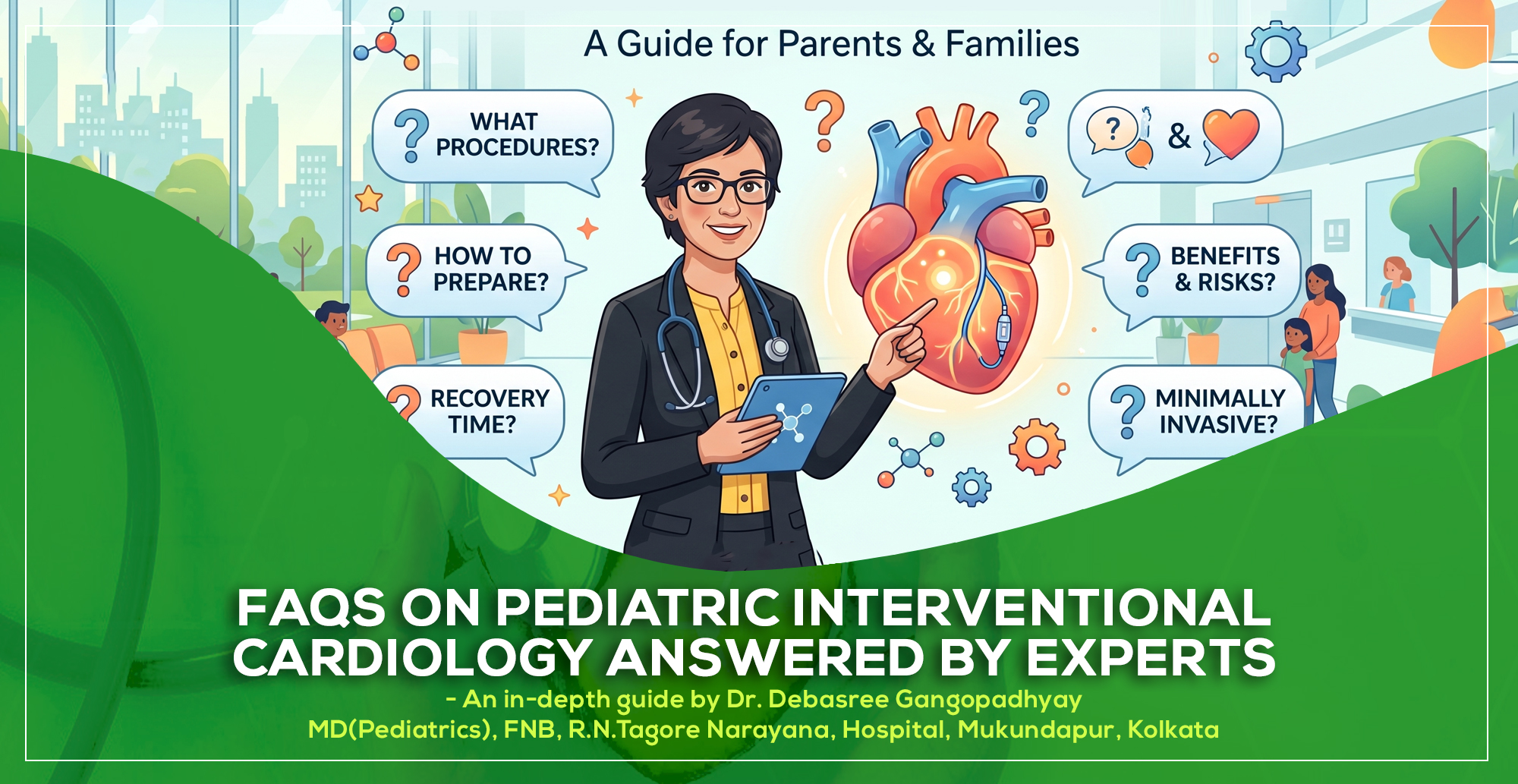
Table of Contents
ToggleFAQs on Pediatric Interventional Cardiology Answered a detailed guide by Dr. Debasree Gangopadhyay, senior heart specialist doctor (MD), Narayana Hospital, Mukundapur, Kolkata.
Introduction
When a child is diagnosed with a heart problem, parents often have many questions and concerns. Understanding the condition, choosing the right treatment, and finding an experienced specialist can feel overwhelming. This is where pediatric interventional cardiology plays an important role. It offers advanced, minimally invasive procedures that can diagnose and treat many congenital and acquired heart conditions in children without the need for major surgery.
Over the last few years, Kolkata has become a trusted destination for pediatric heart care. The city is home to highly experienced child heart specialists, modern hospitals, and advanced cardiac catheterization facilities that provide world-class treatment for infants, children, and teenagers. Many heart defects that once required open-heart surgery can now be treated through catheter-based procedures, helping young patients recover faster and with less discomfort.
Today, a diagnosis of a childhood heart condition does not automatically mean terrifying open-heart surgeries or massive scars. Thanks to the marvels of Pediatric Interventional Cardiology. Many complex heart issues in infants, toddlers, and young adults can be fixed through a minimally invasive procedure that allows your little one to return home in days and live a completely normal, active life.
In this ultimate guide, senior child heart specialists in Kolkata, such as Dr. Debasree Gangopadhyay, answer some of the most frequently asked questions about pediatric interventional cardiology and other complex heart issues of children. From understanding common heart defects and available treatment options to knowing what to expect before and after a procedure, this article aims to provide clear and reliable information for parents seeking the best possible care for their children. Whether your child has recently been diagnosed with a heart condition or you simply want to learn more about modern pediatric heart treatments, this guide will help you make informed decisions with confidence.
This comprehensive, step-by-step guide is designed to get a clear conception for parents. Drawing directly from the insights and frequently asked questions answered by leading child heart Doctor in Kolkata—such as Dr. Debasree Gangopadhyay from Narayana Health (RN Tagore Hospital)—this article will break down everything you need to know. We will explore what these conditions are, how they are treated without major surgery, exactly what steps you should take to get the best care in Kolkata, and answer the most pressing questions parents search for during these trying times.
Understanding the Heart: What is Pediatric Interventional Cardiology?
Pediatric Interventional Cardiology is a specialized branch of heart care that focuses on diagnosing and treating heart conditions in infants, children, and teenagers using minimally invasive procedures. Instead of performing open-heart surgery, doctors use thin tubes called catheters that are inserted through a blood vessel and guided to the heart.
This advanced treatment is commonly used for many Congenital Heart Defects (CHDs), which are heart abnormalities present at birth. Procedures such as closing holes in the heart, widening narrowed blood vessels, and repairing certain heart valve problems can often be performed through catheter-based techniques.
Pediatric Interventional Cardiology offers several benefits, including smaller incisions, less pain, shorter hospital stays, and faster recovery. It has significantly improved the treatment of Congenital Heart Defects (CHDs) and helps many children lead healthier and more active lives. Parents should always consult an experienced pediatric cardiologist to determine the most suitable treatment option for their child.
To understand how interventional cardiology works, it is helpful to think of the human heart as a designed like four-room house. This house has two upper rooms (the atria), two lower rooms (the ventricles), walls separating them (the septum), and doors that open and close to let blood flow through (the valves).
Sometimes, while a baby is still growing in the mother’s womb—typically between the 6th and 8th weeks of pregnancy—this “house” doesn’t form perfectly. A wall might have a gap (a hole in the heart), or a door might be too stiff to open properly. These are known as Congenital Heart Defects (CHDs).
Historically, fixing these structural issues required pediatric cardiovascular surgeons to open the chest, stop the heart temporarily, and manually sew up the holes or repair the valves. While this is still necessary for certain severe conditions, Pediatric Interventional Cardiology offers a dramatically less invasive alternative.
How It Works?
Instead of opening the chest, a pediatric interventional cardiologist uses specialized, ultra-thin, flexible tubes called catheters.
- The doctor makes a tiny puncture, usually in the blood vessels of the child’s groin (the femoral vein or artery).
- The catheter is carefully threaded up through the blood vessels directly into the beating heart, guided by real-time X-ray and ultrasound (echocardiography).
- Once inside the heart, the doctor can deploy tiny medical devices—often shaped like little umbrellas or buttons—to permanently plug a hole, or use specialized balloons to stretch open a narrowed valve.
Because there are no major incisions, the trauma to the child’s body is minimal. There is barely any blood loss, the risk of infection drops drastically, and the child often goes home with nothing more than a small bandage on their leg.
Videos on Pediatric Interventional Cardiology
Step-by-Step Guide: What to Do If Your Child Needs a Heart Specialist in Kolkata
Finding your way through the healthcare system can be challenging, especially when you are worried about your child’s health. If your pediatrician has detected a heart murmur or your newborn is showing symptoms that may indicate a heart problem, it is important to stay calm and take the right steps. The following guide explains what parents in Kolkata should do to get timely diagnosis, expert consultation, and appropriate treatment for their child.
Step 1: Do Not Panic; Observe and Document
The immediate reaction to a suspected heart problem is panic, but your child needs you to be observant. Note down everything. Is your baby sweating excessively while breastfeeding? Do their lips or fingertips turn a bluish tint when they cry? Are they failing to gain weight? Write these symptoms down, along with when they happen and how long they last. This diary will be incredibly helpful to the specialist.
Step 2: Seek Out a “Pediatric Cardiologist”
Many parents do not realize that children need specialized heart care. A child’s heart is very different from an adult’s heart. Adult cardiologists mainly treat conditions such as heart attacks, high blood pressure, and other age-related heart diseases. In contrast, children often suffer from heart defects that are present from birth and affect the structure of the heart.
For this reason, it is important to consult a Pediatric Cardiologist, a specialist who is specially trained to diagnose and treat heart conditions in babies, children, and adolescents. Kolkata has several highly experienced pediatric cardiologists and leading hospitals like Narayana Health (RTIICS – Rabindranath Tagore International Institute of Cardiac Sciences) with dedicated pediatric cardiac departments. These child heart specialists provide advanced diagnosis, treatment, and long-term care for children with congenital and other heart conditions.
Step 3: Prepare for Your First Consultation
Once you have booked an appointment, a little preparation can help you get the most benefit from the visit.
- Keep all medical records ready: Arrange your child’s medical documents in order. Bring previous test reports, scan results, hospital discharge papers, pediatrician prescriptions, and any X-rays or diagnostic reports related to your child’s condition.
- Take a family member with you: The first consultation may involve detailed discussions about your child’s heart health. Having your partner, or another trusted family member with you can help in understanding the doctor’s advice and remembering important details.
- Make a list of questions: Many parents forget their concerns during the appointment. Writing down your questions beforehand can help ensure that all your doubts are addressed during the consultation. This will help you make informed decisions about your child’s treatment and care.
Step 4: The Diagnostic Phase (Echocardiography)
The doctor will listen to your child’s heart and likely recommend a Pediatric Echocardiogram. This is an ultrasound of the heart. It is completely painless, involves no radiation, and takes about 20 to 30 minutes. It allows the doctor to see the blood flowing through the heart in real-time, measure the size of any holes, and check the valves. Sometimes, an ECG (Electrocardiogram) to check the electrical rhythm of the heart is also done.
Step 5: Understanding the Treatment Plan
After identifying the heart condition, the pediatric cardiologist will explain the best treatment approach for your child. The treatment plan depends on the type and severity of the heart defect, as well as your child’s overall health.
- Regular Monitoring- Some small heart defects may not need immediate treatment. In such cases, the doctor may recommend routine check-ups and heart scans to monitor the condition and see if it improves naturally over time.
- Medicines and Supportive Care- Certain children may benefit from medications that help the heart function more efficiently. These medicines can reduce symptoms and support healthy growth while the child is being monitored.
- Interventional Procedures or Surgery- When a heart defect is significant or causes symptoms, treatment may be necessary. The doctor will discuss whether the condition can be corrected through a minimally invasive catheter-based procedure or if heart surgery is the better option.
Step 6: Admission and the Procedure Day
If an interventional procedure is planned, your child will undergo a few pre-procedure evaluations to ensure safety. On the day of treatment, anesthesia will be administered so your child remains comfortable and pain-free throughout the procedure. Most catheter-based interventions are completed within a few hours. Since the procedure requires only a small puncture rather than a large surgical incision, recovery begins quickly, and parents can usually see their child soon after the procedure.
Step 7: Post-Procedure Care and Follow-up
Children generally recover very well after catheter-based heart procedures. Most patients can return home within one or two days. The cardiologist will provide detailed instructions regarding activity levels, medications, and home care. Strenuous activities may be restricted for a short period to allow proper healing. Follow-up visits and echocardiograms are important to confirm that the treatment has been successful and that the heart is functioning normally.
Nutritional Care and Home Management Before and After Treatment
While the doctors manage the anatomical fixes, parents play the most crucial role in managing the child’s nutrition and home environment. A child with a heart defect burns a tremendous amount of energy just trying to pump blood, which makes feeding and weight gain a constant struggle.
Feeding Strategies Before Treatment
If your baby gets tired easily while feeding, standard breastfeeding or bottle-feeding might need adjustment.
- High-Calorie Fortification: Pediatricians often recommend adding specialized calorie fortifiers to expressed breastmilk or formula to ensure the baby gets maximum calories for minimal physical effort.
- Frequent, Smaller Feeds: Instead of forcing a full feed that tires the baby, offer smaller amounts more frequently.
Post-Treatment Home Care
After treatment, proper home care is important for a smooth recovery. Ensure that the child takes all prescribed medicines on time and attends follow-up appointments regularly. Encourage healthy eating and adequate fluid intake as advised by the doctor. Parents should also monitor for any unusual symptoms such as fever, breathing difficulty, excessive tiredness, or swelling, and seek medical attention if needed. Giving the child enough rest while gradually returning to normal activities can help achieve a successful recovery.
The Emotional Journey: Caring for the Parents
A child’s heart condition can be emotionally challenging for parents. Feelings of fear, stress, anxiety, and uncertainty are common, especially during diagnosis and treatment. While medical care focuses on the child’s health, it is equally important for parents to take care of their own emotional well-being. Seeking support from family members, friends, counselors, or parent support groups can help reduce stress and provide comfort. Staying informed about the child’s condition and maintaining open communication with the pediatric cardiology team can also help parents feel more confident and prepared throughout the treatment journey. When parents are emotionally supported, they are better able to provide strength and reassurance to their child.
Final Thoughts: Hope and Healing in Kolkata
A diagnosis of a congenital heart defect can be frightening for any family. However, advances in modern medicine have made the treatment of many childhood heart conditions safer and more effective than ever before. Today, many heart defects can be treated through minimally invasive procedures, reducing the need for major open-heart surgery and allowing children to recover more quickly.
If you notice symptoms of a heart problem in your child or have recently received a diagnosis, it is important to seek medical advice without delay. Early diagnosis and timely treatment can prevent complications and improve long-term health outcomes. Waiting and hoping that a heart condition will improve on its own without proper medical evaluation may lead to serious health issues in the future.
Kolkata is home to experienced pediatric cardiologists and advanced cardiac care centres dedicated to treating children with heart conditions. By consulting the right specialists and choosing appropriate treatment at the right time, many children with heart defects can go on to live healthy, active, and fulfilling lives. With expert care and family support, there is every reason to look forward with hope and confidence.
Detailed FAQs: Answering the Most Common Questions on Pediatric Heart Care
Discovering that your child has a heart condition can be an overwhelming experience for any parent. To help you make confident and informed decisions, we have put together this simple, reliable guide answering the most common questions about pediatric heart care. These insights are guided by expert child heart specialists, including Dr. Debasree Gangopadhyay at Narayana R.N. Tagore Hospital in Kolkata, to give you a clear understanding of your child’s health and the best available treatment options.
What does a "hole in the heart" actually mean?
A "hole in the heart" is a common term for a gap in the walls that separate the heart's chambers, medically known as an ASD (Atrial Septal Defect) or VSD (Ventricular Septal Defect). This gap allows oxygen-rich and oxygen-poor blood to mix, which forces the heart and lungs to work much harder than they normally should.
Can a hole in a child's heart heal naturally on its own?
Yes, it is very possible! Many small holes close naturally as a child grows, requiring no surgery—just regular check-ups with a doctor. However, medium or large holes that cause issues like breathing difficulties or poor weight gain will usually require medical intervention or a procedure if they do not close over time.
Is it possible to detect heart defects before a baby is born?
Yes. Thanks to modern medical technology, doctors can use a specialized ultrasound called a Fetal Echocardiogram, typically between the 18th and 24th weeks of pregnancy. This allows specialists to view the baby's heart in detail and plan for immediate, specialized care right after birth if a defect is found.
What are the early warning signs of a heart problem in babies?
Because babies cannot express discomfort, parents should watch for specific physical signs. Look out for heavy sweating or exhaustion during feeding, a bluish color around the lips and nails (cyanosis), fast or heavy breathing, very slow weight gain, or frequent chest infections like pneumonia.
Is open-heart surgery the only way to treat a pediatric heart defect?
Not at all. Many small to medium defects can now be fixed without open-heart surgery. Using a minimally invasive technique, doctors can guide a tiny tube (catheter) to place a permanent plug-like device over the hole. This method requires no cuts to the chest, leaving natural heart tissue to grow over the device safely.
What is the best age to perform heart surgeries or device closures on children?
The right timing depends on the specific condition. Severe defects usually require surgery before the baby turns one year old to prevent long-term lung damage. For minor conditions treated with non-surgical catheter devices, doctors may wait until the child is 2 to 4 years old to ensure their blood vessels are large enough for the procedure.
Are non-surgical device closure procedures safe for kids?
Absolutely. These non-surgical catheter treatments are globally trusted, advanced, and highly safe when performed by experienced pediatric cardiologists. The tiny devices are made from medical-grade, rust-proof alloys that safely integrate into the heart wall and do not cause issues with airport security scanners.
Will my child be left with a large, visible surgical scar?
If your child has a catheter-based procedure, there will be no chest scar at all—only a tiny, temporary mark in the groin area. Even when traditional surgery is necessary, modern pediatric surgeons in Kolkata use advanced, minimally invasive techniques that leave very small scars, which fade significantly as the child grows up.
How quickly can a child recover after a heart procedure?
Recovery is usually incredibly fast, especially for non-surgical procedures. Many children are sitting up, eating, and playing by the very next day and can go home within 48 hours. After a short resting period of avoiding rough sports for a couple of weeks, they can get back to their completely normal, active routines.
Can a child lead a normal life after their heart defect is repaired?
Yes! Once an isolated defect is successfully closed, the child is considered fully cured. They can go to school, play competitive sports, and grow into healthy adults. They will not have to live their lives labeled as a "heart patient."
Are advanced pediatric heart care facilities available in Kolkata?
Yes, Kolkata is a primary hub for top-tier pediatric heart care in Eastern India. Premier hospitals like Narayana R.N. Tagore Hospital feature state-of-the-art pediatric ICUs and specialized cardiac teams. Families do not need to travel to other states to find world-class medical care for their children.
What if we cannot afford expensive pediatric heart care?
Financial worries should never prevent a child from getting life-saving treatment. In West Bengal, government programs like the Swasthya Sathi scheme cover many pediatric heart procedures. Additionally, leading hospitals have partnerships with charitable trusts, NGOs, and crowdfunding platforms to help support families in need.
If you notice any signs of a heart condition in your child, consult an experienced Child Heart Doctor in Kolkata without delay. Early diagnosis, expert treatment, and strong family support together can help children recover successfully and enjoy a healthy future.
Disclaimer: This article is for informational purposes only and does not constitute medical advice. Always consult with a qualified cardiac specialist for diagnosis and treatment related to your personal health condition.
Read Also:
- The Role of Pediatric Cardiologist for Congenital Muscular Dystrophy (CMD) Treatment in Kolkata
- The Role of the Family in Pediatric Cardiac Recovery
- What to Expect During a Pediatric Heart Catheterization
- Pediatric Echocardiography Test in Kolkata: Purpose, Procedure, centre and Top Echocardiography Doctor
- Heart Health Tips for Children from an Interventional Cardiologist in Kolkata
- Congenital Heart Disease in Children: Causes, Symptoms, and Treatment Options in 2026
- Living Well with Heart Valve Disease: Hope for Children and Families
- Patent Ductus Arteriosus (PDA): Causes, Symptoms and Treatment in Kolkata
- SVT in Children: What Parents Need to Know About Supraventricular Tachycardia
- Rheumatic Heart Disease in Kids: Prevention and Care
- Congenital Heart Valve Defects: Early Signs and Modern Solutions
- Heart Valve Problems in Kids: Symptoms, Diagnosis, and Treatment (2026)
- Ventricular Septal Defect (VSD) in Children – Symptoms, Causes, Types & Treatments in 2025
- Understanding Heart Valve Disease in Children: A Parent’s Guide in 2025
- Atrial Septal Defect (ASD) – Symptoms, Causes, Types & Treatments in 2025

Dr. Debasree Gangopadhyay is a highly respected pediatric cardiologist based in Kolkata, India, specializing in the diagnosis and treatment of heart conditions in children. With a compassionate approach and a commitment to excellence, Dr. Gangopadhyay has made significant contributions to the field of pediatric cardiology. Her expertise includes managing congenital heart defects, arrhythmias, and other cardiovascular conditions in young patients. Dr. Gangopadhyay is dedicated to providing personalized care and staying updated with the latest advancements in pediatric cardiology. She is passionate about educating families on heart health and actively participates in research and community outreach programs.
Comments are closed