


Subtotal $0.00

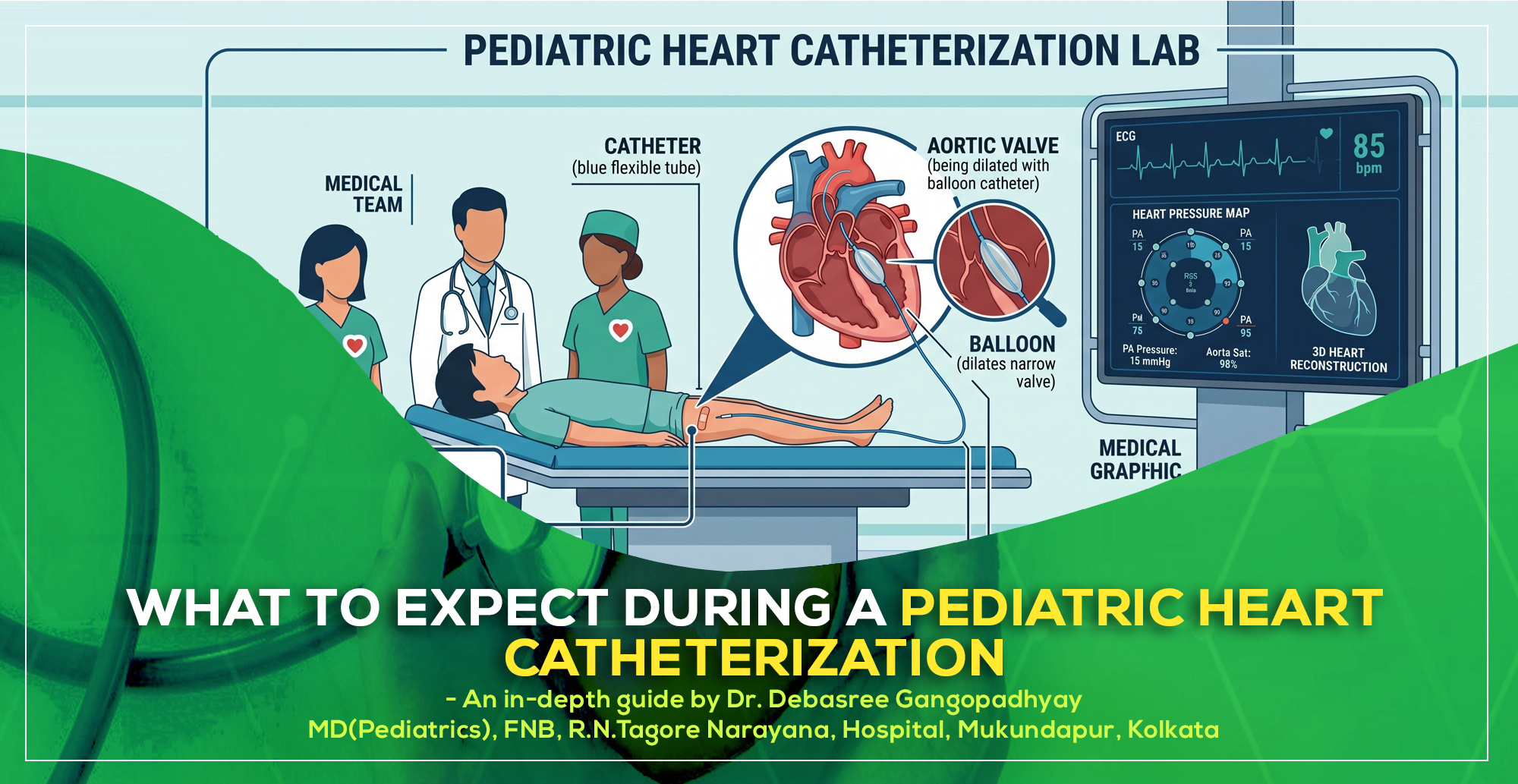
Table of Contents
Toggle‘What to Expect During a Pediatric Heart Catheterization’ – a detailed guide by Dr. Debasree Gangopadhyay, pediatric cardiologist (MD), Narayana Hospital, Mukundapur, Kolkata.
Introduction
When your child is scheduled for a heart catheterization, it is natural to feel a wave of anxiety. Parents often have numerous questions about the tests and treatments their doctor recommends when their child receives a heart condition diagnosis. When a doctor recommends a Pediatric Heart Catheterization, many families become worried because they are unfamiliar with the procedure. However, it is a commonly used and highly effective procedure that helps doctors diagnose and treat various heart problems in children with accuracy and safety.
With the advancement of Pediatric Cardiology Treatment in Kolkata, many children now have access to modern diagnostic and treatment facilities for congenital and acquired heart diseases. An experienced Pediatric Cardiologist in Kolkata plays a crucial role in evaluating a child’s heart condition, determining whether cardiac catheterization is needed, and ensuring the best possible care throughout the treatment journey.
In this blog, we will explain what Pediatric Heart Catheterization is, why it is necessary, how the procedure is performed, and what parents can expect before, during, and after the treatment. We will also discuss the important role of pediatric cardiologists in child heart treatment and how this minimally invasive procedure helps improve the diagnosis and management of many childhood heart conditions. This guide aims to provide clear and simple information to help parents feel more confident and prepared when their child requires cardiac catheterization.
Understanding Pediatric Heart Conditions
The heart is responsible for pumping blood throughout the body. Some children are born with structural heart abnormalities known as congenital heart defects. Others may develop heart-related problems later in childhood.
Common pediatric heart conditions include:
- Atrial Septal Defect (ASD)
- Ventricular Septal Defect (VSD)
- Patent Ductus Arteriosus (PDA)
- Pulmonary Valve Stenosis
- Coarctation of the Aorta
- Tetralogy of Fallot
- Heart rhythm abnormalities
Many of these conditions require detailed evaluation before treatment. This is where Pediatric Heart Catheterization becomes an important tool.
The Role of a Pediatric Cardiologist in Kolkata
A Pediatric Cardiologist in Kolkata specializes in diagnosing and treating heart diseases in children. These specialists undergo advanced training to manage congenital and acquired heart conditions in newborns, infants, children, and adolescents.
During a pediatric heart catheterization procedure, the specialist carefully evaluates the child’s heart structure and function, determines the need for the procedure, and explains the process to the family. The responsibilities of a pediatric cardiologist include reviewing medical reports, conducting heart examinations, recommending the most suitable treatment plan, and monitoring the child’s condition before, during, and after the procedure. They also work closely with anesthesiologists, nurses, and other healthcare professionals to ensure the highest level of safety and care.
What Is Pediatric Heart Catheterization?
Pediatric Heart Catheterization is a minimally invasive medical procedure used to diagnose or treat heart conditions in children.
During the procedure, a thin flexible tube called a catheter is inserted through a blood vessel, usually in the groin, arm, or neck, and carefully guided to the heart.
The catheter allows doctors to:
- Measure blood pressure inside the heart
- Check oxygen levels
- Examine heart chambers
- Evaluate blood flow
- Identify abnormalities
- Treat certain heart defects
Unlike open-heart surgery, cardiac catheterization requires only a small puncture in the skin and generally involves a shorter recovery period.
Why Is Pediatric Heart Catheterization Necessary?
A pediatric cardiologist may recommend catheterization for several reasons.
Diagnostic Purposes
The procedure helps doctors gather detailed information that may not be visible through standard imaging tests.
It can help diagnose:
- Congenital heart defects
- Narrowed blood vessels
- Valve abnormalities
- Pulmonary hypertension
- Complex heart conditions
Therapeutic Purposes
In many cases, cardiac catheterization can be used to treat heart defects without surgery.
It includes:
- Closing holes in the heart
- Opening narrowed valves
- Widening narrowed blood vessels
- Implanting specialized devices
This reduces the need for major surgery in selected patients.
Conditions Commonly Treated Through Pediatric Heart Catheterization
Modern Pediatric Cardiology Treatment in Kolkata uses catheterization to treat various heart conditions.
Atrial Septal Defect (ASD)
A hole between the upper chambers of the heart can often be closed using a catheter-delivered device.
Patent Ductus Arteriosus (PDA)
A small blood vessel that remains open after birth can be closed through catheter-based techniques.
Pulmonary Valve Stenosis
A narrowed pulmonary valve can often be widened using balloon valvuloplasty.
Coarctation of the Aorta
A narrowed section of the aorta may be treated using balloon dilation or stenting.
Certain Heart Rhythm Disorders
Specialized catheter procedures can help diagnose and treat abnormal heart rhythms.
How Does a Pediatric Cardiologist Decide If Catheterization Is Needed?
Before recommending the procedure, the pediatric cardiologist conducts a thorough evaluation.
This may include:
- Medical history review
- Physical examination
- Electrocardiogram (ECG)
- Chest X-ray
- Echocardiography
- Blood tests
- MRI or CT scan in selected cases
If these tests do not provide enough information or if treatment can be performed through a catheter, cardiac catheterization may be recommended.
Preparing for Pediatric Heart Catheterization
Proper preparation helps ensure a safe and successful procedure. Preparing your child for a heart catheterization procedure can help reduce stress and ensure a smooth experience. Before the procedure, the pediatric cardiologist will explain the purpose of the test or treatment, the expected benefits, and any possible risks. Parents should inform about their child’s medical history, allergies, and current medications.
Children are usually asked not to eat or drink for a specific period before the procedure. Following these instructions carefully is important for safety during anesthesia or sedation. Comfortable clothing and necessary medical documents should be brought to the hospital on the day of the procedure.
It is also helpful to talk to your child in calm and reassuring way about what will happen. Cardiac catheterization procedures are minimally invasive, and children are given intravenous sedation and pain medicine during the procedure. Proper preparation and clear communication with the healthcare team can make the experience safer and more comfortable for both the child and the family.
What Happens on the Day of the Procedure?
On the day of the procedure, the patient is kept nil by mouth for 4-6 hours before the procedure and maintained on IV fluids. After completing the necessary paperwork, nurses and medical staff check vital signs such as blood pressure, heart rate, and temperature. The doctor reviews the patient’s medical history and explains the procedure once again to address any last-minute questions.
Before the procedure begins, the patient may receive medication to help them relax. Depending on the type of treatment, local anesthesia, sedation, or general anesthesia may be given. The medical team then carries out the procedure in a carefully monitored environment using specialized equipment.
After the procedure is completed, the patient is moved to a recovery area where doctors and nurses closely monitor their condition. Once the patient is stable and comfortable, the healthcare team provides instructions regarding recovery, medications, diet, and follow-up visits. The goal is to ensure a safe procedure and a smooth recovery process.
How Long Does the Procedure Take?
The duration depends on the complexity of the condition.
Generally:
- Diagnostic catheterization: 30 minutes to 2 hours
- Interventional catheterization: 1 to 4 hours
More complex procedures may require additional time.
What to Expect During Pediatric Heart Catheterization?
Pediatric heart catheterization is a common procedure used to diagnose or treat certain heart conditions in children. Before the procedure, your child will undergo a physical examination and may need blood tests or imaging studies. The doctor will explain the process and answer any questions you may have.
During the procedure, your child is usually given medicine or general anesthesia to ensure comfort. A thin, flexible tube called a catheter is inserted through a blood vessel, usually in the groin, arm, or neck, and carefully guided to the heart. Using special imaging technology, the pediatric cardiologist examines the heart’s structure and function or performs necessary treatments.
The procedure typically takes one to several hours, depending on the condition being treated. Afterward, your child will be monitored in a recovery area for a few hours. Mild soreness or bruising at the catheter insertion site is normal and usually improves within a few days.
Most children recover quickly and can return to their normal activities within a short period, following the doctor’s advice. Pediatric heart catheterization is generally safe and plays an important role in diagnosing and treating many childhood heart conditions.
Recovery After Pediatric Heart Catheterization
Recovery is an important part of the treatment process. After the procedure, the child is monitored closely.
Doctors check:
- Heart rate
- Blood pressure
- Oxygen levels
- Bleeding at the catheter site
The child may need to remain still for several hours to allow proper healing of the insertion site. The insertion site should be kept clean and dry to reduce the risk of infection.
Most children experience only mild discomfort. Any pain is usually controlled with medications.
Most children recover quickly and can resume their normal daily activities within a few days. However, if there is unusual swelling, excessive bleeding, fever, or severe pain, parents should contact their healthcare provider immediately. Regular follow-up visits help ensure that the child’s heart is functioning well after the procedure.
When Can a Child Go Home?
Children generally go home the next day after diagnostic catheterization.
However, some children may stay for 2-3 days for observation, especially if:
- An intervention was performed
- The child is very young
- Additional monitoring is required
The pediatric cardiologist determines the safest discharge plan.
Home Care After the Procedure
Parents receive detailed instructions before discharge.
Activity Restrictions
Children should avoid strenuous activities for a few days.
Wound Care
The insertion site should be kept clean and dry.
Medication Instructions
Some children may require medications after the procedure.
Follow-Up Visits
Regular appointments help monitor recovery and treatment success.
Warning Signs Parents Should Watch For
While complications are uncommon, parents should contact the doctor if the child develops:
- Fever
- Excessive bleeding
- Swelling at the insertion site
- Severe pain
- Difficulty breathing
- Chest pain
Prompt medical attention helps prevent complications.
Is Pediatric Heart Catheterization Safe?
Yes. Pediatric cardiac catheterization is generally considered very safe and it is performed by experienced child heart specialist.
Modern technology has significantly improved safety and success rates.
The risk of serious complications is low, particularly when the procedure is conducted by trained pediatric cardiologists in specialized heart centers.
Possible Risks and Complications
Although uncommon, potential risks include:
- Bleeding
- Infection
- Allergic reaction to contrast dye
- Blood vessel injury
- Abnormal heart rhythms
- Blood clots
The medical team takes extensive precautions to minimize these risks.
Benefits of Pediatric Heart Catheterization
The procedure offers several advantages.
Accurate Diagnosis
It provides detailed information about heart structure and function.
Minimally Invasive
No large surgical incision is required.
Faster Recovery
Recovery is usually quicker compared to open-heart surgery.
Reduced Hospital Stay
Many children return home within a day.
Effective Treatment
Several heart defects can be corrected without surgery.
How Pediatric Cardiologists Support Families
The role of a Pediatric Cardiologist in Kolkata extends far beyond performing procedures.
They help families by:
- Explaining diagnoses clearly
- Discussing treatment options
- Guiding parents through decision-making
- Monitoring long-term heart health
- Supporting emotional well-being
This support ensures children receive the best possible care throughout their treatment journey.
FAQ's on Pediatric Heart Catheterization
What is pediatric heart catheterization?
Pediatric heart catheterization is a minimally invasive medical procedure where a thin, flexible tube called a catheter is inserted into a blood vessel (usually in the groin, arm, or neck) and guided to the heart. It allows pediatric cardiologists to diagnose and treat various congenital and acquired heart conditions without open-heart surgery.
Why does my child need a cardiac catheterization?
The procedure is used for both diagnostic and therapeutic purposes. Diagnostically, it helps measure heart pressures, oxygen levels, and examine blood flow. Therapeutically, it can repair heart defects like closing holes in the heart (ASD, VSD, PDA) or widening narrowed valves and blood vessels.
Is pediatric heart catheterization safe?
Yes, pediatric heart catheterization is generally considered very safe. With modern technology and experienced pediatric cardiologists, serious complications are rare. The medical team takes extensive precautions before, during, and after the procedure to ensure safety.
Will my child be awake during the procedure?
No, children are kept comfortable during the procedure. Sedation or general anesthesia is administered so that your child remains relaxed, pain-free, and perfectly still throughout the cardiac catheterization.
How long does a pediatric heart catheterization procedure take?
The duration depends on whether the procedure is diagnostic or interventional. A diagnostic catheterization typically takes 30 minutes to 2 hours, whereas an interventional (treatment) catheterization can take between 1 and 4 hours.
What heart conditions can be treated with cardiac catheterization?
Catheterization can treat several conditions including Atrial Septal Defect (ASD), Patent Ductus Arteriosus (PDA), Ventricular Septal Defect (VSD), Pulmonary Valve Stenosis, Coarctation of the Aorta, and certain cardiac rhythm disorders.
How should we prepare our child before the procedure?
Preparation includes fasting (nil by mouth) for 4 to 6 hours prior to the procedure as directed by your doctor. Parents should inform the medical team about all medications and allergies, bring required medical records, and calmly reassure the child about what to expect.
How long is the hospital stay for pediatric heart catheterization?
Most children undergoing diagnostic catheterization can go home the next day. If an interventional procedure was performed or if the child is very young, a stay of 1 to 3 days may be required for observation.
What is the recovery period after heart catheterization?
Recovery is generally quick. Children need to lie flat and still for 4 to 6 hours immediately after the procedure to heal the insertion site. Most children resume normal daily activities within a few days, following doctor's guidance on avoiding strenuous exercise.
What are the warning signs parents should watch for after going home?
Parents should contact the healthcare team immediately if the child experiences fever, excessive bleeding or swelling at the puncture site, severe pain, coldness or discoloration in the leg used for access, chest pain, or difficulty breathing.
What are the advantages of heart catheterization over open-heart surgery?
Catheterization is minimally invasive and requires no large surgical incisions or chest opening. Benefits include significantly less pain, minimal scarring, a lower risk of infection, shorter hospital stays, and much faster recovery times.
Is heart catheterization available for children in Kolkata?
Yes, advanced pediatric cardiology centers in Kolkata offer state-of-the-art facilities for diagnostic and interventional heart catheterization led by experienced pediatric cardiologists.
Conclusion
Hearing that your child needs a Pediatric Heart Catheterization can be overwhelming, but understanding the procedure can help reduce anxiety and build confidence. Pediatric heart catheterization is a safe, minimally invasive, and highly effective method for diagnosing and treating many childhood heart conditions.
An experienced Pediatric Cardiologist in Kolkata plays a vital role in evaluating the child’s condition, performing the procedure, and providing long-term follow-up care. Thanks to advancements in Pediatric Cardiology Treatment in Kolkata, children today have access advance diagnostic and treatment options that offer excellent outcomes with faster recovery.
For parents, the most important step is choosing a qualified pediatric heart specialist, following medical advice carefully, and maintaining regular follow-up appointments. With timely diagnosis and expert care, most children undergoing pediatric heart catheterization can look forward to a healthy and active future.
Disclaimer: This article is for informational purposes only and does not constitute medical advice. Always consult with a qualified cardiac specialist for diagnosis and treatment related to your personal health condition.
Read Also:
- The Role of Pediatric Cardiologist for Congenital Muscular Dystrophy (CMD) Treatment in Kolkata
- The Role of the Family in Pediatric Cardiac Recovery
- Pediatric Echocardiography Test in Kolkata: Purpose, Procedure, centre and Top Echocardiography Doctor
- Heart Health Tips for Children from an Interventional Cardiologist in Kolkata
- Congenital Heart Disease in Children: Causes, Symptoms, and Treatment Options in 2026
- Living Well with Heart Valve Disease: Hope for Children and Families
- Patent Ductus Arteriosus (PDA): Causes, Symptoms and Treatment in Kolkata
- SVT in Children: What Parents Need to Know About Supraventricular Tachycardia
- Rheumatic Heart Disease in Kids: Prevention and Care
- Congenital Heart Valve Defects: Early Signs and Modern Solutions
- Heart Valve Problems in Kids: Symptoms, Diagnosis, and Treatment (2026)
- Ventricular Septal Defect (VSD) in Children – Symptoms, Causes, Types & Treatments in 2025
- Understanding Heart Valve Disease in Children: A Parent’s Guide in 2025
- Atrial Septal Defect (ASD) – Symptoms, Causes, Types & Treatments in 2025

Dr. Debasree Gangopadhyay is a highly respected pediatric cardiologist based in Kolkata, India, specializing in the diagnosis and treatment of heart conditions in children. With a compassionate approach and a commitment to excellence, Dr. Gangopadhyay has made significant contributions to the field of pediatric cardiology. Her expertise includes managing congenital heart defects, arrhythmias, and other cardiovascular conditions in young patients. Dr. Gangopadhyay is dedicated to providing personalized care and staying updated with the latest advancements in pediatric cardiology. She is passionate about educating families on heart health and actively participates in research and community outreach programs.
Comments are closed