


Subtotal $0.00

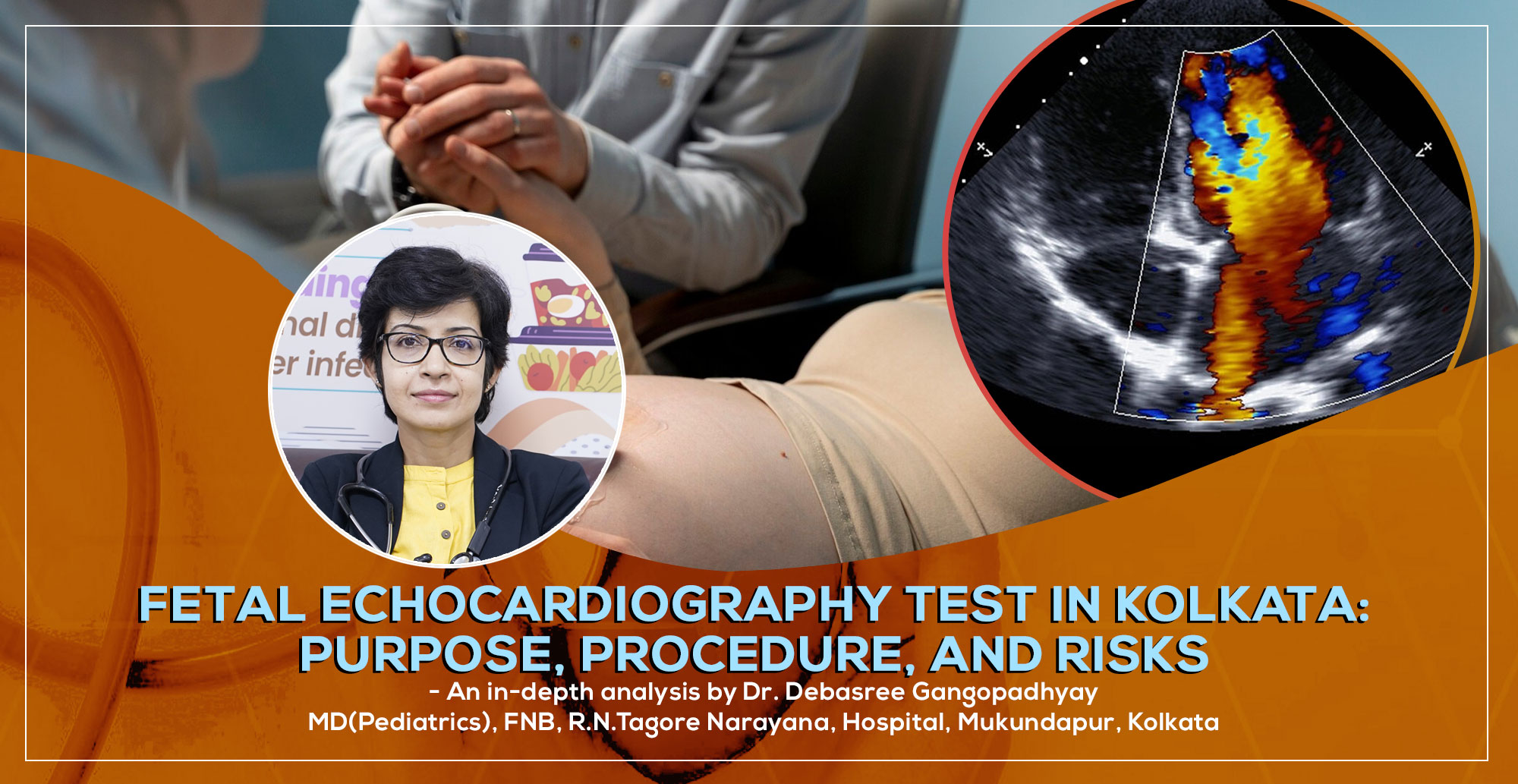
Table of Contents
ToggleA detailed discussion on ‘Fetal Echocardiography Test in Kolkata in 2026: Purpose, Procedure, and Risks’ by Dr. Debasree Gangopadhyay, pediatric cardiologist (MD), Narayana Hospital, Mukundapur, Kolkata.
Introduction
Pregnancy is a special journey, and every parent wants to be sure that their baby is healthy and developing well. One area that requires special attention is the baby’s heart. Heart problems are among the most common birth defects, but fortunately, modern medical technology allows us to detect them before birth. One of the most important tests for this purpose is the fetal echocardiography test in Kolkata. This advanced ultrasound test gives a detailed view of the unborn baby’s heart and helps doctors detect any heart problems at an early stage. Early diagnosis allows better planning, treatment, and care after delivery.
A skilled Fetal Echo Cardiologist in Kolkata carefully performs and interprets this test to examine the structure and function of the baby’s heart. In many cases, you may also be referred to a trusted Pediatric Cardiologist in Kolkata who specializes in treating heart conditions in infants and children.
In this blog, we will explain the purpose of the fetal echocardiography test in Kolkata, how the procedure is done, and the possible risks involved. This simple guide will help you understand why this test is important and how it supports your baby’s heart health from the very beginning.
What is a Fetal Echocardiography?
Fetal echocardiography, often called fetal echo, is a detailed ultrasound test that examines the baby’s heart before birth. Unlike a regular prenatal ultrasound that checks overall growth and development, a fetal echocardiography focuses specifically on the heart’s structure, chambers, valves, and blood flow.
By using high-resolution imaging, the Fetal Echo Cardiologist in Kolkata can identify any abnormalities in the heart, such as congenital heart defects, valve problems, or irregular heart rhythms. This test provides critical information for planning treatment immediately after birth or, in some cases, even before delivery.
This allows a fetal echocardiography doctor in Kolkata to detect potential heart defects before the baby is even born.
Why is it different from a regular ultrasound?
During a routine ultrasound test (anomaly scan), the radiologist looks at the heart, but they are checking for the basic presence of four chambers. A fetal echocardiogram goes much further. It evaluates:
- The flow of blood through the heart.
- The heartbeat and rhythm (checking for any irregularities).
- The strength of the heart muscle.
- The precise connections of the arteries and veins.
The Purpose: Why is this Test Recommended?
The fetal echocardiography test is recommended to check the health and development of the baby’s heart before birth. The heart is one of the first organs to develop in the womb, and even a small problem can affect the baby’s overall health. This test helps doctors detect heart defects early so that proper care and planning can be arranged.
The primary purpose of a fetal echocardiogram in pregnancy in Kolkata is to rule out or diagnose Congenital Heart Defects (CHDs). CHDs are the most common type of birth defect, and early detection is the key to providing the best possible care for your newborn.
There are several reasons why your obstetrician might refer you to a fetal echocardiography clinic in Kolkata:
1. Maternal Health Factors
Certain conditions in the mother can increase the risk of a baby having a heart condition:
- Diabetes and Thyroid Disorder: Mothers with pre-gestational diabetes or thyroid disorder during pregnancy may also be advised to undergo this test. There is a slightly higher risk. Some medications taken during pregnancy can affect the baby’s heart development, and a fetal echo helps ensure everything is normal.
- Diseases: Autoimmune Diseases can sometimes affect the baby’s heart rhythm.
- Medications: Certain medications taken for seizures, depression, or acne during early pregnancy can impact heart development.
- Infections: Exposure to rubella (German measles) or other viral infections during pregnancy.
2. Family History
If a parent or a previous sibling was born with a heart defect, the chances of the current baby having one increase slightly. Genetic conditions, such as Down syndrome in the fetus, also strongly warrant a detailed heart check.
3. Findings on Routine Ultrasound
It is also recommended if a routine pregnancy ultrasound shows something unusual in the baby’s heart. Sometimes the heartbeat may appear irregular, too fast, or too slow. A fetal echocardiography helps the doctor understand the exact cause.
4. Assisted Reproduction
Pregnancies achieved through IVF are often monitored more closely with a fetal echo as a standard precaution.
5. Multiple Pregnancies
In multiple pregnancies like twins or triplets, the risk of heart abnormalities can be slightly higher. That is another reason why doctors may recommend this test.
Overall, this test is recommended to ensure that the baby’s heart is developing properly and to take timely action if any issue is detected.
The main goal of recommending fetal echocardiography is early detection. If a heart problem is found, doctors can plan the delivery in a well-equipped hospital and arrange immediate care by a Pediatric Cardiologist after birth. Early diagnosis improves treatment outcomes and gives parents peace of mind.
When is the Best Time for the Test?
Timing is crucial. The heart is small but fully formed quite early. However, to see the intricate details clearly, the ideal window is usually between 18 and 24 weeks of pregnancy.
In some high-risk cases, a “preliminary” echo can be done as early as 14-15 weeks, but the views are much clearer later in the second trimester. If a problem is suspected later in the pregnancy, the test can still be performed right up until 3rd trimester.
Who Performs Fetal Echocardiography in Kolkata?
A Fetal Echo Cardiologist in Kolkata is a highly trained specialist in diagnosing and evaluating heart problems in unborn babies. These doctors have extensive experience in using ultrasound technology to study fetal hearts and interpreting complex findings. In some cases, if a problem is detected, the Pediatric Cardiologist in Kolkata is consulted to advise on treatment options for after birth.
Many leading hospitals and cardiac centers in Kolkata have specialized fetal echo clinics where you can schedule the test and get a detailed consultation.
The Step-by-Step Procedure for fetal echocardiography test in Kolkata
One of the best things about a fetal echocardiography test in Kolkata is that it is completely non-invasive. There are no needles, no radiation, and no pain for you or the baby.
Preparation
There is almost no preparation needed! Unlike some pelvic ultrasounds, you do not need a full bladder. You can eat and drink normally before the appointment. I usually recommend wearing a comfortable two-piece outfit so the abdomen is easily accessible.
Procedure
- You will lie down on an examination table.
- The doctor applies a special gel to your abdomen to help the ultrasound waves pass through.
- A transducer (a small handheld device) is moved over your belly to create images of the baby’s heart.
- The Fetal Echo Cardiologist in Kolkata carefully examines the heart’s chambers, valves, blood flow, and rhythm.
Duration
A thorough fetal echo usually takes between 15-30 minutes. If the baby is in a difficult position (e.g., lying with their back toward the probe), it might take a bit longer as we wait for them to shift.
Result
The cardiologist will review the images and discuss the findings with you. After the test, your doctor will explain the results in detail. Depending on the findings:
Normal results: No further action may be needed beyond routine prenatal care.
Abnormal results: If any abnormalities are found, the Pediatric Cardiologist in Kolkata may recommend further imaging, monitoring, treatment plan, or a delivery plan in a specialized center where immediate care can be provided.
The main goal is to ensure that both mother and baby receive the best care possible and that any heart issues are managed promptly and effectively.
Understanding the Results
Once the test is complete, there are generally three possible outcomes:
1. Normal Results
This is the most common outcome. It means the heart’s structure and rhythm appear healthy. It provides immense peace of mind to parents and allows the rest of the pregnancy to proceed with one less worry.
2. Inconclusive Results
Sometimes, if the mother has a high BMI or the baby is in a persistent “face-down” position, we might not get every single view we need. In these cases, we may ask you to return in a week or two for a follow-up.
3. Abnormal Results
If a heart defect is found, it can be a shock. However, early diagnosis is a gift. It allows us to:
- Educate the parents on what the condition means.
- Plan for a safe delivery at a hospital equipped with a Neonatal Intensive Care Unit (NICU).
- Connect you with the right Child Heart Doctors in Kolkata and surgeons if an intervention is needed after birth.
- In some rare cases, certain rhythm problems can even be treated with medication given to the mother during pregnancy.
What Can Fetal Echocardiography Detect?
Fetal echocardiography can detect a wide range of heart conditions, including:
- Structural defects: Abnormalities in the heart chambers, walls, or valves.
- Congenital heart defects: Common defects include ventricular septal defects, atrial septal defects, tetralogy of fallot and transposition of the great arteries.
- Arrhythmias: Irregular heartbeats, such as supraventricular tachycardia (SVT) or bradycardia.
- Valve problems: Issues with the opening and closing of heart valves.
- Blood flow problems: Abnormal circulation patterns within the heart or major vessels.
Early detection allows parents and doctors to plan for interventions, surgeries, or special care right after birth, which can save lives and improve outcomes.
Risks of Fetal Echocardiography
Are There Any Risks?
Fetal echocardiography is considered a very safe procedure because it uses ultrasound, which does not involve radiation. However, there are a few points to consider:
- No direct harm to mother or baby: The test is non-invasive and painless.
- Possible inconclusive results: Sometimes, it may be difficult to get clear images due to the baby’s position, maternal body type, or gestational age.
- Emotional stress: Discovering a potential heart problem can be stressful for parents, which is why counseling and support from a Pediatric Cardiologist in Kolkata or fetal echo specialist are important.
Overall, the benefits of detecting heart problems early far outweigh any minor inconveniences or emotional stress associated with the test.
Why Choose a Child Heart Specialist in Kolkata?
Choosing a specialist in Kolkata for a fetal echo cardiography test ensures accurate diagnosis and expert care. A trained Fetal Echo Cardiologist has special knowledge and experience in examining the unborn baby’s heart in detail. They can identify even small abnormalities that may not be visible in a regular ultrasound.
Kolkata has several well-equipped hospitals and heart centers with advanced imaging technology. This helps in getting clear and precise results. In case any problem is detected, you can easily consult an experienced Pediatric Cardiologist in Kolkata for further guidance and treatment planning. A pediatric cardiologist is trained specifically to understand the nuances of the developing heart.
Another advantage is the availability of complete care in one place. From diagnosis to post-birth treatment, specialists in Kolkata provide coordinated support for both mother and baby.
Choosing a qualified specialist gives parents confidence, proper medical advice, and peace of mind during pregnancy.
Conclusion
The health of your baby’s heart is a very important part of a safe and healthy pregnancy. A fetal echocardiography test helps doctors carefully examine the baby’s heart before birth and detect any possible problems at an early stage. Early diagnosis gives parents time to understand the condition and allows doctors to plan proper treatment or special care after delivery.
The test is simple, safe, and non-invasive. It does not cause pain and does not use radiation. Most importantly, it provides peace of mind to parents by giving clear information about their baby’s heart health.
If your doctor recommends this test, it is best to consult an experienced specialist and follow medical advice. Timely evaluation and expert guidance can make a big difference in ensuring the best outcome for your baby. Taking this step means you are giving your child the best possible start in life.
Frequently Asked Questions (FAQs) on Fetal Echocardiography Test
Does a normal fetal echo guarantee my baby won't have heart problems later?
It is a very strong indicator of a healthy heart. However, some issues (like a small hole or a bicuspid aortic valve, mild coarctation) might only be detectable after birth when the baby's circulatory system transitions from the womb to the outside world.
If my baby has a heart defect, does it mean I did something wrong?
Absolutely not. Most congenital heart defects happen by chance during the early stages of development. It is not caused by anything the mother did or didn't do.
Can heart defects be fixed while the baby is still in the womb?
In most cases, heart defects cannot be fully fixed while the baby is still in the womb. However, some specific heart rhythm problems can be treated during pregnancy with medicines given to the mother. These medicines pass to the baby and help control the heartbeat. For structural heart defects, treatment is usually planned after birth. Early diagnosis through fetal echocardiography helps doctors prepare for proper care or surgery soon after delivery, improving the baby’s outcome.
How do I find the best fetal echocardiography doctor in Kolkata?
Look for a pediatric cardiologist with specialized experience in fetal echocardiography.
Are you looking for a fetal echocardiography clinic in Kolkata?
If you have concerns about your baby's heart or have been referred for a scan, don't hesitate to reach out. Early detection saves lives.
How to book an appointment with a fetal echo cardiologist in Kolkata?
To book an appointment with Dr. Debasree Gangopadhyay, a reputed fetal echo cardiologist in Kolkata, India, call +91 8585077458.
t children go on to lead healthy, active lives after successful valve treatment.
Medical Disclaimer: The information provided here is for educational purposes only and is not a substitute for professional medical advice. Please consult a qualified cardiologist or healthcare provider regarding any heart-related concerns or treatment plans.
Read Also:
- SVT in Children: What Parents Need to Know About Supraventricular Tachycardia
- Ventricular Septal Defect (VSD) in Children – Symptoms, Causes, Types & Treatments in 2025
- Understanding Heart Valve Disease in Children: A Parent’s Guide in 2025
- Atrial Septal Defect (ASD) – Symptoms, Causes, Types & Treatments in 2025
- Common Heart Conditions in Children: A Doctor’s Guide in 2025
- How Safe Are Cardiac Catheterization Procedures for Children in 2025?
- Essential Guide to Newborn Heart treatment in Kolkata in 2025
- Comprehensive Pediatric Heart Check Up: What’s Included & Why it’s Worth It

Dr. Debasree Gangopadhyay is a highly respected pediatric cardiologist based in Kolkata, India, specializing in the diagnosis and treatment of heart conditions in children. With a compassionate approach and a commitment to excellence, Dr. Gangopadhyay has made significant contributions to the field of pediatric cardiology. Her expertise includes managing congenital heart defects, arrhythmias, and other cardiovascular conditions in young patients. Dr. Gangopadhyay is dedicated to providing personalized care and staying updated with the latest advancements in pediatric cardiology. She is passionate about educating families on heart health and actively participates in research and community outreach programs.
Comments are closed