


Subtotal $0.00

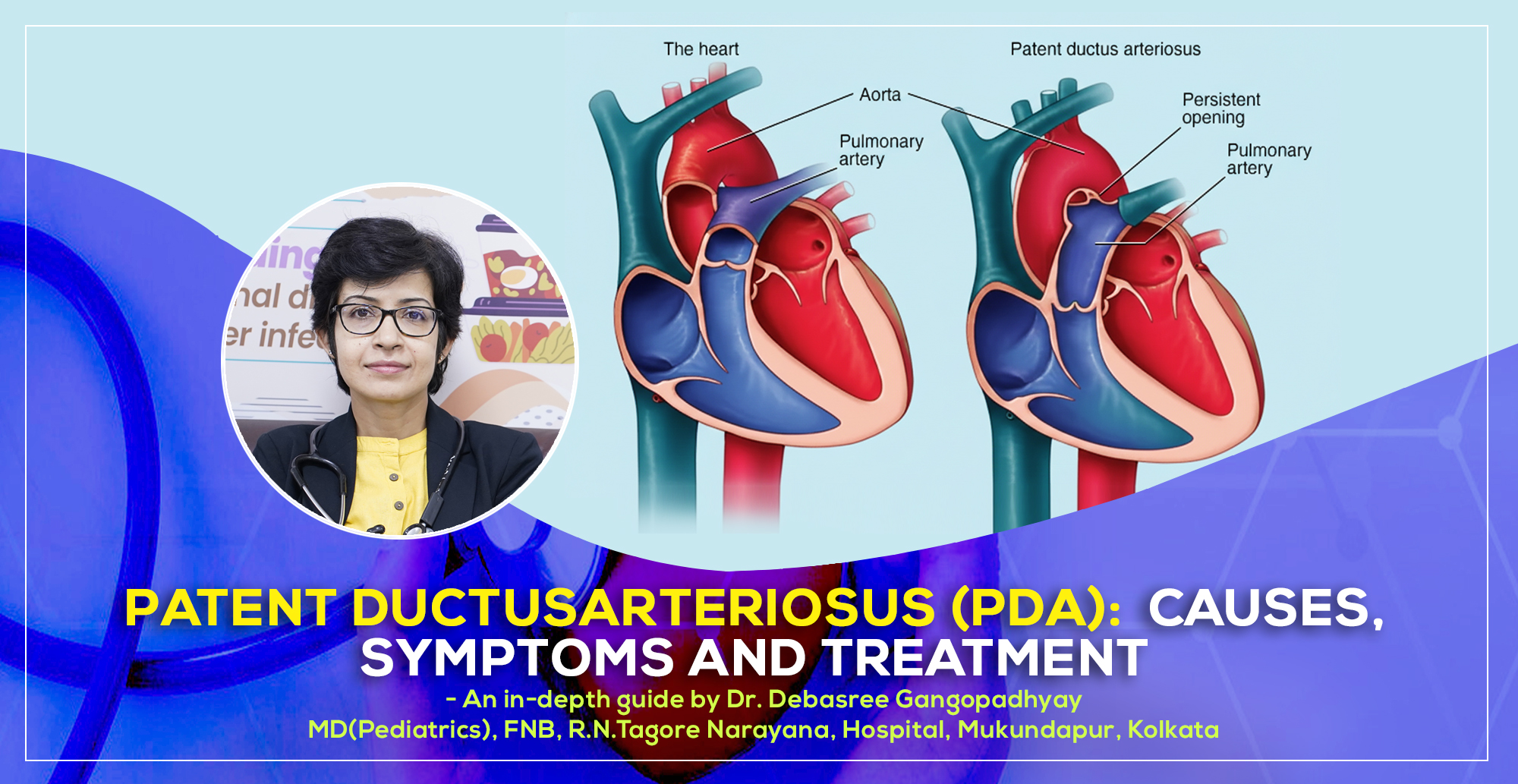
A detailed discussion on ‘Patent Ductus Arteriosus (PDA): Causes, Symptoms and Treatment in Kolkata’ by Dr. Debasree Gangopadhyay, pediatric cardiologist (MD), Narayana Hospital, Mukundapur, Kolkata.
Table of Contents
ToggleIntroduction
Patent Ductus Arteriosus (PDA) is a congenital heart condition that mainly affects newborn babies and young children. It happens when a small blood vessel in the heart, which is normal before birth, does not close after the baby is born. Because of this, extra blood flows to the lungs, and the heart has to work harder than usual. If not detected and treated on time, PDA can lead to breathing problems, poor growth, and other heart-related complications.
Understanding the causes, symptoms, and treatment of PDA helps parents take the right steps at the right time. With early diagnosis and proper medical care, most children with PDA can recover well and lead a healthy life. Today, advanced medical facilities and experienced specialists make Patent Ductus Arteriosus (PDA) Treatment in Kolkata both safe and effective. The city has well-equipped hospitals and skilled doctors who regularly manage congenital heart conditions in children.
If you’re in Kolkata, consulting an experienced Pediatric Cardiologist in Kolkata is important for accurate diagnosis and choosing the most suitable treatment option, whether it is medication, catheter-based closure, or surgery. In this blog, we will explain Patent Ductus Arteriosus (PDA)along with its causes, symptoms, and line of treatment in a simple way to help parents make informed decisions for their child’s heart health.
Understanding Patent Ductus Arteriosus (PDA): A Complete Guide
When you hear your child has a heart condition, your world might feel like it’s turned upside down. But here’s the thing—not all heart conditions are created equal, and some, like Patent Ductus Arteriosus, are highly treatable if detected early. Let me walk you through everything you need to know about this condition, from what causes it to how it’s treated, especially if you’re looking for care in Kolkata.
What is congenital heart disease?
Congenital heart disease (CHD) refers to heart problems that are present at birth. These conditions develop while the baby is still growing in the mother’s womb. Some congenital heart diseases are mild and may not cause serious issues, while others need timely medical care. One common example of congenital heart disease is Patent Ductus Arteriosus (PDA).
What Is Patent Ductus Arteriosus?
Patent Ductus Arteriosus (PDA) is a congenital heart condition that is present from birth. Before a baby is born, there is a small blood vessel called the Ductus Arteriosus that connects two major arteries of the heart. This vessel is important for blood circulation in the womb. After birth, when the baby starts breathing on their own, this blood vessel is supposed to close naturally within a few days.
When the Ductus Arteriosus does not close and remains open, the condition is called Patent Ductus Arteriosus. Because of this opening, extra blood flows to the lungs, making the heart work harder than normal. If not treated on time, PDA can lead to breathing problems, poor growth, and heart strain. With early diagnosis and proper Patent Ductus Arteriosus (PDA) Treatment in Kolkata, most children recover well and lead healthy lives.
Why Does PDA Occur? Understanding the Causes
PDA occurs when the Ductus Arteriosus fails to close after birth. One of the most common reasons is premature birth, as the baby’s heart may not be fully developed to trigger natural closure. Low birth weight is also linked to a higher risk of PDA.
Other possible causes include genetic factors, family history of congenital heart disease, and certain infections during pregnancy. PDA is also seen more often in baby girls than boys. In many cases, the exact cause is not clearly known.
Understanding why PDA occurs helps in early detection and timely care. With the availability of advanced Patent Ductus Arteriosus (PDA) Treatment in Kolkata, children with PDA can receive the right treatment at the right time, reducing the risk of long-term complications.
Here we will explain the causes for Patent Ductus Arteriosus (PDA):
Normal Fetal Heart Development
To understand why PDA happens, we need to rewind to before birth. Inside the womb, a baby doesn’t breathe air—oxygen comes from the mother through the umbilical cord. The Ductus Arteriosus acts as a shortcut, diverting blood away from the lungs since they’re not yet needed for oxygen exchange.
When the baby is born, everything changes in an instant. With that first cry, the lungs expand, oxygen fills them, and a series of chemical changes signal the Ductus Arteriosus to close. Usually, this happens within 48 to 72 hours after birth. But in some babies, especially premature ones, this closure doesn’t happen as it should.
Other Risk Factors for PDA
Several factors come into play. Premature birth is the biggest risk factor—the earlier a baby is born, the higher the chance the Ductus Arteriosus will remain open. Babies born before 28 weeks of pregnancy have a particularly high risk.
Genetic factors also play a role. If there’s a family history of congenital heart defects, the risk increases. Girls are also slightly more likely to have PDA than boys, in many cases, the exact cause is not clearly known.
Certain conditions during pregnancy can increase the risk too. If a mother has rubella (German measles) during pregnancy, uses certain medications, or has poorly controlled diabetes, the baby’s risk of PDA goes up. High-altitude births have also been associated with a higher incidence of PDA, possibly due to lower oxygen levels.
Recognizing the Symptoms of Patent Ductus Arteriosus
The symptoms of Patent Ductus Arteriosus (PDA) are related to how much blood flows through the persistent opening. Small PDAs may not show symptoms at all, while larger defects usually cause noticeable problems.
Common Symptoms in Babies
- Rapid or heavy breathing
- Sweating a lot, even during feeding
- Poor weight gain or growth delays
- Getting tired easily while feeding or playing
- A heart murmur (an unusual sound heard with a stethoscope)
- Fast heartbeat
These symptoms occur because extra blood is being pushed into the lungs and heart, making them work harder than normal.
If you notice any of these signs in your baby or child, it’s important to talk to a doctor — especially a Pediatric Cardiologist in Kolkata. Early diagnosis and treatment can prevent complications.
How Is PDA Diagnosed?
Patent Ductus Arteriosus (PDA) is usually diagnosed through a careful medical check-up and a few simple tests. Doctors often first suspect PDA when they hear an unusual heart sound, called a heart murmur, during a routine examination of a baby or child.
Doctors use some of the tests to diagnose PDA:
Echocardiogram (heart ultrasound):To confirm the diagnosis, an echocardiogram (heart ultrasound) is commonly done. This test shows the structure of the heart, how blood flows through the heart and helps the doctor clearly see the open Ductus Arteriosus.
Electrocardiogram (ECG): Measures the heart’s electrical activity.An ECG (electrocardiogram) helps understand the heart’s rhythm.
Chest X-ray:A chest X-ray may be used to check the size of the heart and lungs.
Accurate diagnosis is crucial for deciding Patent Ductus Arteriosus (PDA) treatment and the next steps. Once PDA is confirmed, doctors can decide the best approach for care, including options for Patent Ductus Arteriosus (PDA) Treatment in Kolkata, based on the child’s age, symptoms, and overall heart health.
Patent Ductus Arteriosus (PDA) Treatment Options
The Patent Ductus Arteriosus (PDA) treatment plan depends on your child’s age, symptoms, and the size of the opening.
- Watchful Waiting: If the PDA is small and not causing problems, child heart doctors may simply monitor the baby. Some PDAs close on their own within the first year of life.
- Medications: In premature infants, medicines may help the ductus close naturally. These drugs work by reducing chemicals that keep the ductus open.
- Catheter-Based Closure: This is a minimally invasive procedure where a thin tube (catheter) is threaded through a blood vessel to the heart, and a small device is placed to close the PDA. It avoids open-heart surgery and usually has a faster recovery time.
- Surgery: For larger PDAs or when medications and catheter closure aren’t suitable, open surgery may be required. A surgeon closes the ductus with clips or stitches.
- Follow-Up: After PDA treatment, children often need follow-up visits with their doctor. Many go on to live active, normal lives once the PDA is closed.
Finding Patent Ductus Arteriosus (PDA) Treatment in Kolkata
Finding the right care for a child with PDA is very important for a healthy recovery. Patent Ductus Arteriosus (PDA) Treatment in Kolkata is available at many well-equipped hospitals and heart care centers in Kolkata that specialize in congenital heart conditions. These centers offer complete care, starting from diagnosis to treatment and follow-up. An experienced Pediatric Cardiologist in Kolkata plays a key role in managing PDA. The doctor evaluates the size of the defect, the child’s symptoms, and overall health before suggesting the best treatment option. Depending on the case, treatment may include regular monitoring, medicines, catheter-based closure, or surgery. Early consultation helps reduce risks and ensures better outcomes for children with PDA.
Kolkata has emerged as a major hub for pediatric cardiac care in Eastern India, with world-class facilities and experienced specialists who treat hundreds of children with congenital heart conditions every year. Kolkata has many hospitals with special departments just for children’s heart problems. These hospitals have the latest machines and equipment to find and treat heart conditions. They use advanced ultrasound machines to see the heart clearly and have special labs where doctors can do both catheter procedures and surgeries if needed. Kolkata’s hospitals can treat even the most difficult heart cases.
What makes Kolkata special is not just the modern equipment, but the skilled doctors. Many children’s heart doctors in Kolkata have studied at top medical schools in India and other countries. They bring the best medical knowledge and treatment methods to families here. You can get excellent treatment right here in Kolkata.
Many hospitals and clinics in the city provide specialized treatment for PDA, from diagnosis to surgery or catheter procedures. Some notable centres for Patent Ductus Arteriosus (PDA) Treatment in Kolkata include:
- Narayana RN Tagore Hospital, Mukundapur – A large multi-specialty cardiac care centre with advanced facilities.
- BM Birla Heart Hospital – Well-known for pediatric heart care and surgeries.
- Manipal Hospitals – The hospital provides pediatric heart evaluations and interventions.
- Apollo Multispeciality Hospitals, Kolkata – The department of pediatric cardiologyis a medical specialty that focuses on detecting and treating cardiac diseases in children.
These centres have trained teams to manage PDA, congenital heart disease, and related conditions.
Factors to Consider When Choosing the Right Doctor for Patent Ductus Arteriosus (PDA) Treatment in Kolkata
Finding the right doctor for Patent Ductus Arteriosus (PDA) treatment in Kolkata is one of the most important decisions you’ll make for your child’s health. Here’s a simple step-by-step guide to help you choose the best pediatric cardiologist in Kolkata:
Qualification and Training
Choose a child heart doctor who has a relevant educational background and specialized training in pediatric cardiology.
Experience
One of the first things to look for is experience in treating congenital heart diseases, especially Patent Ductus Arteriosus (PDA). A well-qualified Pediatric Cardiologist in Kolkata has the training to diagnose the condition accurately and suggest the most suitable treatment.
Hospital Affiliation
A doctor working at a reputed hospital with good facilities can provide better care for your child. Good hospitals usually have:
- Modern equipment for diagnosis and treatment
- catheterization lab
- Well-equipped pediatric care unit
- 24/7 emergency services
- Trained support staff
Communication
A good doctor should be able to explain things in simple language that you can understand.You should feel comfortable asking questions and discussing your worries. The doctor should explain the condition, treatment options, risks, and follow-up care in a simple and understandable way.
Check Reviews and Testimonials
Real experiences from other families can give you valuable insights about the doctor’s skills, behavior, and overall care quality. Talk to other parents whose children have been treated by the same doctor. Positive feedback and recommendations show that the child heart specialist is trusted and respected for child heart care.
Hospital support and post-treatment care
Check the hospital support system and post-treatment care. After treatment, regular check-ups are essential to monitor your child’s recovery. A trusted Pediatric Cardiologist in Kolkata, supported by a skilled medical team, can ensure safe treatment and long-term monitoring that helps your child recover and grow with a healthy heart.
Availability &Accessibility
Make sure the doctor whose clinic or hospital is easy to reach from your home when you need appointments or follow-ups. Good availability means shorter waiting times, quick help during emergencies, and reduced travel stress.
When Is PDA Treatment Necessary?
Treatment for Patent Ductus Arteriosus (PDA) becomes necessary when the open blood vessel starts affecting the heart or lungs. A small PDA may not cause any symptoms and can sometimes close on its own, especially in full-term babies. In such cases, doctors may only recommend regular check-ups.
PDA treatment is usually required if the child shows symptoms like fast breathing, poor weight gain, frequent chest infections, or tiredness during feeding or physical activity. Treatment is also advised when tests show that the heart is working harder than normal or there is increased blood flow to the lungs.
In premature babies, early treatment may be needed to support breathing and prevent complications. For older children or adults, PDA treatment is important if the condition leads to heart enlargement, high blood pressure in the lungs, or repeated infections.
Today, Patent Ductus Arteriosus (PDA) Treatment in Kolkata offers safe and effective options, including medicines, catheter-based procedures, and surgery when required. Early treatment helps protect heart health and allows the child to grow and live a healthy, active life.
Conclusion
Patent Ductus Arteriosus (PDA) is a common congenital heart condition that can be safely treated when detected early. Understanding the causes, symptoms, and treatment options helps parents take timely action and avoid future complications. While some small PDAs may close on their own, others need medical or surgical care to protect the heart and lungs.
With proper diagnosis, modern treatment methods, and regular follow-up, most children with PDA can grow up healthy and active. Consulting an experienced pediatric heart specialist at the right time makes a big difference in outcomes. Early care, the right guidance, and ongoing support ensure the best possible heart health for children affected by Patent Ductus Arteriosus.
FAQ's on Patent Ductus Arteriosus (PDA): Causes, Symptoms & Treatment in Kolkata in 2026
Who is the best pediatric cardiologist for PDA treatment in Kolkata?
Dr. Debasree Gangopadhyay is a highly experienced senior Pediatric Cardiologist (MD) specializing in the treatment of Patent Ductus Arteriosus (PDA) and other congenital heart defects. She is currently associated with Narayana Hospital, Mukundapur, Kolkata, and is known for her expertise in both medical and interventional management of child heart conditions.
What are the common symptoms of PDA in infants?
Common symptoms of PDA include rapid breathing, shortness of breath, poor weight gain, and getting tired or sweating while feeding. In some cases, a doctor may detect a specific "machine-like" heart murmur during a routine check-up. If you notice these signs, it is vital to consult a specialist like Dr. Debasree Gangopadhyay at Narayana Hospital.
What causes Patent Ductus Arteriosus (PDA)?
PDA occurs when the ductus arteriosus—a blood vessel that allows blood to bypass a baby's lungs while in the womb—fails to close naturally shortly after birth. This is more common in premature babies, infants with low birth weight, or those born with certain genetic conditions like Down syndrome.
How is PDA treated at Narayana Hospital, Mukundapur?
Treatment at Narayana Hospital depends on the size of the PDA and the baby's age. Options include medication (to encourage closure), minimally invasive device closure (using a catheter and a tiny plug), or surgical ligation for more complex cases. Dr. Debasree Gangopadhyay specializes in these advanced interventional procedures.
Is PDA closure surgery or device closure safe for my baby?
Yes, PDA closure is a routine and highly successful procedure in 2026. Device closure is minimally invasive, meaning there is no large chest incision, and most children recover quickly. Senior experts like Dr. Debasree Gangopadhyay ensure the highest safety standards at specialized centers like Narayana Hospital.
What happens if PDA is left untreated?
If a large PDA is not treated, it can lead to serious long-term complications such as heart failure, pulmonary hypertension (high blood pressure in the lungs), and an increased risk of heart infections (endocarditis). Early diagnosis and intervention are key to a healthy life for the child.
Disclaimer: This article is for informational purposes only and does not constitute medical advice. Always consult with a qualified cardiac specialist for diagnosis and treatment related to your personal health condition.
Read Also:
- How to Choose Child Heart Specialist in Kolkata in 2026
- Rheumatic Heart Disease in Kids: Prevention and Care
- Congenital Heart Valve Defects: Early Signs and Modern Solutions
- Heart Valve Problems in Kids: Symptoms, Diagnosis, and Treatment (2026)
- Ventricular Septal Defect (VSD) in Children – Symptoms, Causes, Types & Treatments in 2025
- Understanding Heart Valve Disease in Children: A Parent’s Guide in 2025
- Atrial Septal Defect (ASD) – Symptoms, Causes, Types & Treatments in 2025
- Common Heart Conditions in Children: A Doctor’s Guide in 2025
- How Safe Are Cardiac Catheterization Procedures for Children in 2025?
- Essential Guide to Newborn Heart treatment in Kolkata in 2025
- Comprehensive Pediatric Heart Check Up: What’s Included & Why it’s Worth It

Dr. Debasree Gangopadhyay is a highly respected pediatric cardiologist based in Kolkata, India, specializing in the diagnosis and treatment of heart conditions in children. With a compassionate approach and a commitment to excellence, Dr. Gangopadhyay has made significant contributions to the field of pediatric cardiology. Her expertise includes managing congenital heart defects, arrhythmias, and other cardiovascular conditions in young patients. Dr. Gangopadhyay is dedicated to providing personalized care and staying updated with the latest advancements in pediatric cardiology. She is passionate about educating families on heart health and actively participates in research and community outreach programs.
The Role Of The Family In Pediatric Cardiac Recovery
August 24, 2026[…] Patent Ductus Arteriosus (PDA): Causes, Symptoms and Treatment in Kolkata […]