


Subtotal $0.00

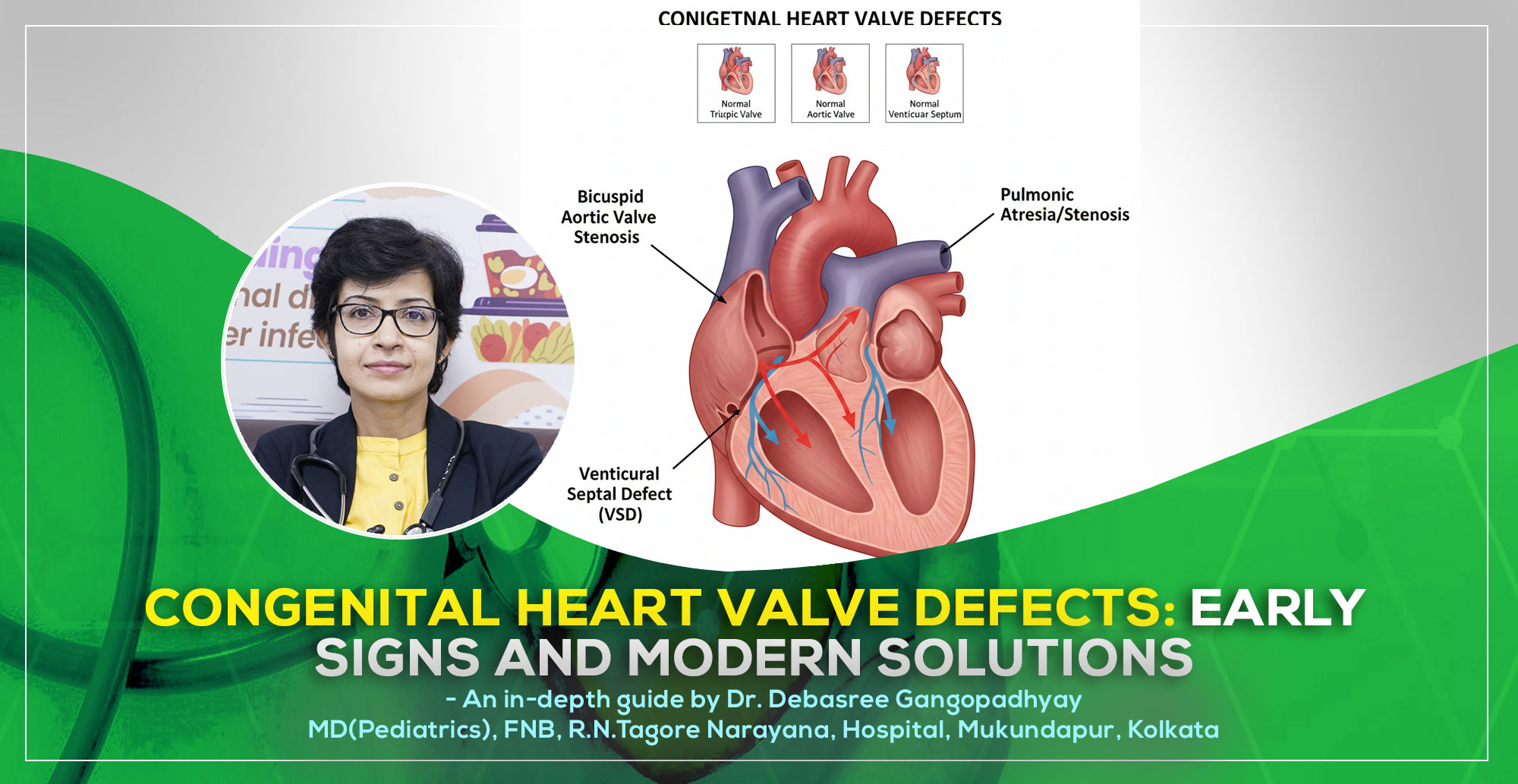
A detailed guide on ‘Congenital Heart Valve Defects: Early Signs and Modern Solutions’ by Dr. Debasree Gangopadhyay, pediatric cardiologist (MD), Narayana Hospital, Mukundapur, Kolkata.
Introduction
Congenital Heart Defects (CHDs) are structural problems with the heart or nearby blood vessels present at birth.Congenital heart valve defects are heart conditions present from birth that affect how blood flows through a child’s heart. These valves control the flow of blood through the heart. When a valve does not form correctly, it can affect how well the heart pumps blood. Many parents may not notice the early signs, as symptoms can be mild or unclear in the beginning, but early diagnosis plays a key role in successful treatment. With timely care from an experienced Congenital Heart Disease Doctor in Kolkata, children can lead healthy and active lives. This blog explains the early warning signs, diagnosis, and modern treatment options available today under the guidance of a skilled Pediatric Cardiologist in Kolkata, helping parents make informed decisions for their child’s heart health.
Understanding Congenital Heart Valve Defects
What Are Congenital Heart Valve Defects?
Congenital heart valve defects occur when a valve in a baby’s heart develops abnormally before birth. The main valves are:
- Mitral valve — between the left atrium and left ventricle
- Tricuspid valve — between the right atrium and right ventricle
- Aortic valve — between the left ventricle and the body
- Pulmonary valve — between the right ventricle and the lungs
Defects may cause the valve to be too narrow (stenosis), to leak (regurgitation), or to have an abnormal shape. Some defects are mild and cause no immediate trouble. Others can cause symptoms at birth or later in infancy and childhood.
These congenital heart valvedefects develop during pregnancy, typically in the first eight weeks when the baby’s heart is forming. While we don’t always know exactly why they occur, various factors like genetics, maternal health conditions, and certain medications during pregnancy can play a role.
Types of Heart Valve Defects in Children
There are several types of valve defects that can affect children. Aortic stenosis happens when the aortic valve is too narrow, restricting blood flow from the heart to the body. Pulmonary stenosis involves a narrowed pulmonary valve, which affects blood flow to the lungs. Some children are born with bicuspid aortic valves, meaning they have two leaflets instead of the normal three.
Valve regurgitation is another common issue where valves don’t close completely, allowing blood to leak backward. The severity can range from mild, requiring only monitoring, to severe cases needing immediate intervention proceduresfrom a Pediatric Cardiologist in Kolkata.
How common are valve defects?
Congenital valve defects are among the more common types of heart problems seen in newborns and children. While some defects are mild and may not need treatment, others require regular monitoring or early medical care to ensure normal heart function as the child grows. If you suspect anything unusual, a Child Heart Specialist in Kolkata can evaluate your child and explain whether immediate treatment is needed.
Early Signs Parents Should Never Ignore
Early detection gives the best chance for timely treatment. Parents should be aware of these common signs in newborns and infants. These symptoms can vary depending on your child’s age and the severity of the condition.
Early signs to watch for in Newborns and Infants
Newborns and infants with congenital heart valve disease may show signs like fast or difficult breathing, poor feeding, slow weight gain, bluish lips or skin, and excessive sweating during feeding or crying. Frequent infections, heart murmur and unusual tiredness can also be early warning signs that should not be ignored.Not every baby with a murmur has a serious problem—many murmurs are harmless. But a murmur plus any of any other symptoms should prompt evaluation by aNewbornHeart Doctor in Kolkata.
Early symptoms in Toddlers and Older Children
In toddlers and older children, symptoms may include easy tiredness during play, shortness of breath, chest discomfort, dizziness, or poor growth compared to other children. Some children may also have frequent respiratory infections or swelling in the legs or abdomen, indicating the need for medical evaluation.If you notice these signs, consulting a Child Heart Specialist in Kolkata should be a priority.
General warning signs of congenital heart valve disease at any age may include shortness of breath, tiredness during routine activities, chest discomfort, dizziness, or poor growth in children. Bluish skin or lips, frequent infections, and irregular heartbeat can also be signs that need medical attention.
How congenital heart valve defects are diagnosed
Diagnosis usually begins with a physical exam and listening to the heart. From there, several tests can confirm valve problems:
- Pulse oximetry — a quick test that measures oxygen levels in the blood. Low oxygen may indicate a heart problem.
- Chest X-ray — shows the size and shape of the heart and lungs.
- Electrocardiogram (ECG) — records the heart’s electrical activity to detect rhythm or chamber changes.
- Echocardiogram (echo) — an ultrasound of the heart. This is the most important test for valve defects. It shows valve structure, blood flow, and heart function.
- Cardiac MRI or CT — used in some cases for detailed images.
- Cardiac catheterization — a catheter is threaded into the heart to measure pressures and sometimes to treat the defect during the same procedure.
An accurate diagnosis helps doctors choose the right treatment for your child. A Congenital Heart Disease Doctor in Kolkata will guide you through the required tests and clearly explain the results and next steps.
Modern treatment options
Treatment depends on the type and severity of the valve defect and the child’s overall health. Modern options include medical care, catheter-based procedures, and surgery.
- Watch-and-wait approach: Not every heart valve defect requires immediate surgery. In mild cases, a Child Heart Specialist in Kolkata may suggest regular check-ups and careful monitoring. Some children improve as they grow, while others stay stable without needing treatment for many years.
- Medical management: Some mild defects can be managed with medicines and careful follow-up. Medicines can help the heart work more efficiently or control symptoms such as heart failure or arrhythmias. Regular visits with a Child Heart Specialist in Kolkata are important to track growth and heart function.
- Catheter-based interventions (minimally invasive): Many valve problems can now be treated without open-heart surgery. A catheter is inserted through a blood vessel to reach the heart. Procedures include:
-
- Balloon valvuloplasty — a balloon is inflated to open a narrowed valve (stenosis).
- Valve repair devices — in some cases, devices can be used to reduce leakage or improve valve function.
These procedures often mean shorter recovery, less pain, and faster return to normal life compared to open surgery. A Pediatric Cardiologist in Kolkata who performs interventional cardiology can evaluate if your child is a candidate.
- Surgery (valve repair or replacement):When catheter procedures cannot fix the problem, surgery may be required. When valve defects are severe or worsening, surgical repair or replacement might be necessary. Pediatric cardiac surgery has advanced dramatically in recent years, with excellent success rates and improved techniques.Surgeons can:
- Repair the valve —Valve repair is often preferred when possible because it preserves the child’s own tissue. Surgeons can reconstruct valves, remove excess tissue, or repair torn leaflets to improve heart function.
- Replace the valve —If the valve cannot be repaired, doctors may replace it with a mechanical valve or a tissue valve. In children, valve replacement needs careful planning because the child’s growth may require another surgery in the future.
Cardiac surgeons who specialize in children work closely with pediatric cardiologists and intensive care teams to give the best outcomes. If surgery is recommended, meeting the surgical team and understanding risks, benefits, and recovery plans will help you feel more prepared.
Recovery and long-term care
Living with a repaired or replaced heart valve means ongoing medical supervision. Children need regular checkups with their Pediatric Cardiologist in Kolkata to ensure everything continues functioning properly. After treatment, children need regular follow-up. This includes clinical exams and periodic echocardiograms to check valve function. Some children may need:
- Lifelong follow-up
- Activity guidance and restrictions (temporary or long-term)
- Antibiotic precautions for some procedures (as advised by doctor)
- Future interventions if the valve problem recurs or if a replaced valve needs attention
A strong care team that includes a baby heart doctor in Kolkata, a pediatric cardiac surgeon, and a rehabilitation specialist helps children thrive after treatment.
When to see a specialist in Kolkata
If you notice any of the early signs listed above, or if a routine newborn exam found a heart murmur, see a pediatric heart expert. In Kolkata, parents can consult a Congenital Heart Disease Doctor in Kolkata for:
- immediate evaluation after abnormal newborn screening
- persistent breathing or feeding problems in infants
- repeated lung infections or poor growth
- follow-up care for known congenital heart conditions
Early referral and diagnosis make treatment safer and more effective.
How to Choose the right Pediartic Cardiologist
Picking the right specialist can feel overwhelming. Picking the right specialist can feel overwhelming. Here are factors to consider when choosing the right pediatric cardiologist in Kolkata:
Look for pediatric training and experience — choose doctors who specialize in congenital heart disease and treat children regularly.
- Hospital facilities — Choose a hospital with advanced diagnostic tools and pediatric care units where the child heart doctor in Kolkata practices. A good hospital should have pediatric echocardiography, catheterization labs, and experienced cardiac surgeons for children.
- Check the team approach — best care comes from a team that includes pediatric cardiologists, cardiac surgeons, anesthetists, intensive care nurses, and rehabilitation specialists.
- Patient-centric Approach — You should choose a child heart doctor who focuses not only on treatment but also on the child’s overall well-being. Better daily comfort, reduced symptoms, and patient satisfaction show that the doctor takes a complete and caring approach to heart care.
- Communication and empathy — choose a doctor who listens, explains clearly in simple language, and includes you in decisions.
- Follow-up and long-term planning — ensure the child heart doctor provides a clear plan for follow-up, activity, school, and future care.
- Read Reviews and Recommendation:Read reviews and seek recommendations from other parents to find a trusted doctor.
If you live in Kolkata, choose a Child Heart Specialist in Kolkata who meets these criteria.
Living with a Congenital Heart Valve Defect
Daily Life and Activity Levels
Many children with repaired or managed heart valve defects lead active, fulfilling lives. However, some restrictions might apply depending on the severity of the condition. Your Pediatric Cardiologist in Kolkata will provide specific guidelines about physical activities.
Some children can participate in all activities without restriction, while others need to avoid competitive sports or intense exertion. The key is finding the right balance that allows your child to stay active without putting excessive strain on their heart.
Nutrition plays a supporting role too. A heart-healthy diet helps children maintain appropriate weight and overall cardiovascular health. In some cases, sodium restriction might be necessary to reduce fluid retention.
Supporting your child at home
Parents and caregivers play a key role in recovery and long-term health:
- Follow medical advice — give medicines as prescribed and keep follow-up appointments.
- Monitor growth and feeding — track weight gain and report concerns.
- Encourage safe activity — ask the doctor which activities are allowed. Many children return to normal play after treatment.
- Protect from infections — practice hand hygiene and protect from infections.
- Nutrition and rest — balanced nutrition and adequate rest support recovery.
- Emotional support — children may be anxious after hospital stays. Gentle reassurance, play therapy, and routine help them adjust.
You need to talk openly with your Congenital Heart Disease Doctor in Kolkata about school, vaccines, travel, sports participation, etc.
Conclusion
Congenital heart valve defects can be serious, but early detection and proper treatment make a big difference in a child’s health and future. By recognizing warning signs on time and consulting an experienced specialist, parents can ensure the best care for their child. With modern diagnostic tools and advanced treatment options available today, children with heart valve defects can lead active and healthy lives with the right medical support.Recognizing early warning signs and seeking prompt evaluation from a qualified Pediatric Cardiologist in Kolkata can make all the difference in your child’s outcome and quality of life.
Disclaimer: This article is for informational purposes only and does not constitute medical advice. Always consult with a qualified cardiac specialist for diagnosis and treatment related to your personal health condition.
Read Also:
- Heart Valve Problems in Kids: Symptoms, Diagnosis, and Treatment (2026)
- Pediatric Valve Disease Guide: What Every Parent Should Know
- Ventricular Septal Defect (VSD) in Children – Symptoms, Causes, Types & Treatments in 2025
- Understanding Heart Valve Disease in Children: A Parent’s Guide in 2025
- Atrial Septal Defect (ASD) – Symptoms, Causes, Types & Treatments in 2025
- Common Heart Conditions in Children: A Doctor’s Guide in 2025
Follow Me on Youtube & Facebook

Dr. Debasree Gangopadhyay is a highly respected pediatric cardiologist based in Kolkata, India, specializing in the diagnosis and treatment of heart conditions in children. With a compassionate approach and a commitment to excellence, Dr. Gangopadhyay has made significant contributions to the field of pediatric cardiology. Her expertise includes managing congenital heart defects, arrhythmias, and other cardiovascular conditions in young patients. Dr. Gangopadhyay is dedicated to providing personalized care and staying updated with the latest advancements in pediatric cardiology. She is passionate about educating families on heart health and actively participates in research and community outreach programs.
The Role Of The Family In Pediatric Cardiac Recovery
August 24, 2026[…] Congenital Heart Valve Defects: Early Signs and Modern Solutions […]