


Subtotal $0.00
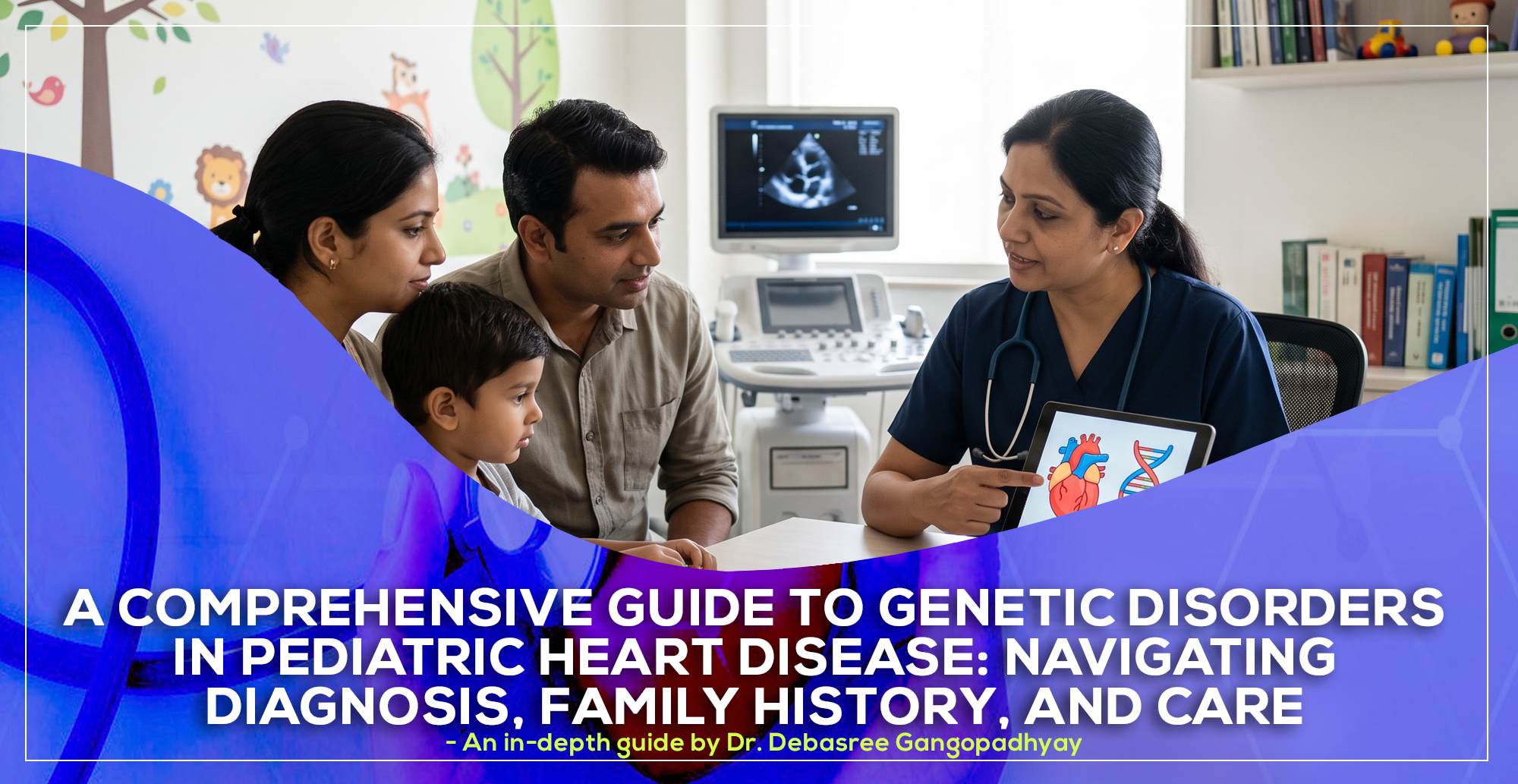
A Comprehensive Guide to Genetic Disorders in Pediatric Heart Disease: Navigating Diagnosis, Family History, and Care – (From the desk of Dr. Debasree Gangopadhyay, Renowned Pediatric Cardiologist)
Introduction
When a child is diagnosed with a heart problem, parents naturally have many questions. One common concern is whether the condition could be related to genes or family history. Some heart conditions are present from birth, while others may develop later during childhood. In certain cases, genetic factors can play an important role.
Genetic Disorders in Pediatric Heart Disease can affect the structure of the heart, the way the heart beats, or how the heart muscle works. Understanding the possible genetic connection can help doctors plan the right tests, treatment, and long-term follow-up.
As a pediatric cardiologist, I believe that parents should receive clear and simple information about these conditions. A genetic heart condition does not always mean that a child will have serious heart problems throughout life. Early diagnosis, appropriate treatment, and regular monitoring can make a meaningful difference. In this blog, we will discuss Genetic Disorders in Pediatric Heart Disease, including their possible causes, the role of family history, diagnosis, genetic testing, treatment options, and the importance of regular pediatric cardiac care.
What Are Genetic Disorders in Pediatric Heart Disease?
Genes carry information that helps our body grow and function. Changes, also called variants or mutations, in certain genes can sometimes affect the development or function of the heart.
Some genetic conditions may cause congenital heart defects, meaning the heart problem is present from birth. Others can affect the heart rhythm, heart muscle, blood vessels, or other parts of the body.
Examples of heart conditions that can sometimes have a genetic connection include:
- Certain congenital heart defects
- Cardiomyopathies
- Some heart rhythm disorders
- Certain aortic conditions
- Some syndromes associated with heart abnormalities
However, not every child with a heart defect has a genetic disorder. Heart disease in children can have many possible causes, and sometimes no single cause can be identified.
How Do Genes Affect a Child’s Heart?
The heart develops through a complex process before birth. Genes help control the formation of the heart chambers, valves, blood vessels, and electrical system.
If a genetic change affects one of these processes, it may contribute to a heart abnormality.
For example, a genetic condition may be associated with:
Structural heart defects
Some genetic conditions are associated with holes in the heart, abnormal valves, abnormal blood vessels, or other congenital heart defects.
Heart muscle problems
Certain genetic conditions can cause cardiomyopathy, where the heart muscle becomes enlarged, thickened, weak, or stiff.
Abnormal heart rhythms
Some inherited conditions mainly affect the heart’s electrical system. Children may experience an unusually fast, slow, or irregular heartbeat.
Problems involving the aorta
Certain inherited disorders can increase the risk of abnormalities involving the aorta, the body’s largest blood vessel.
This is why understanding a child’s complete medical and family history is an important part of pediatric cardiac evaluation.
When Should We Suspect a Genetic Connection?
Not every heart problem in a child is caused by a genetic condition. However, a genetic connection may be considered when certain signs or family history are present. As a pediatric cardiologist, I may recommend further evaluation when:
- A child has a heart defect present from birth.
- Several family members have heart disease.
- A close relative had unexplained sudden cardiac death at a young age.
- The child has repeated fainting, unexplained seizures, or abnormal heart rhythms.
- A child is diagnosed with cardiomyopathy without a clear cause.
- There is a known genetic disorder in the family.
- The child has a heart problem along with other developmental or physical differences.
A family history does not mean that a child definitely has an inherited heart condition. It simply gives us an important clue. A detailed medical history, cardiac evaluation, and, when appropriate, genetic testing can help us understand the situation better.
Early evaluation can help identify possible inherited heart conditions and guide the right care for the child and family.
The Importance of Family History
Family history is one of the simplest and most useful tools when evaluating possible Genetic Disorders in Pediatric Heart Disease.
During consultation, I may ask parents questions such as:
- Has anyone in the family had a congenital heart defect?
- Has anyone been diagnosed with cardiomyopathy?
- Did any family member have unexplained fainting?
- Has anyone experienced sudden cardiac death at a young age?
- Are there known genetic disorders in the family?
- Has anyone required a pacemaker or defibrillator at a young age?
- Have siblings or close relatives had similar health problems?
Parents sometimes remember only major illnesses. But even details that appear minor can be useful.
If possible, parents should collect available medical reports of affected family members. This can help the doctor understand whether there may be a pattern within the family.
Genetic Testing: Does Every Child Need It?
No. Genetic testing is not required for every child with heart disease.
The decision depends on the child’s diagnosis, symptoms, physical findings, family history, and the opinion of the treating medical team.
Genetic testing may sometimes be considered when:
- The child has a condition strongly associated with a genetic cause.
- Several family members have similar heart problems.
- The child has cardiomyopathy without a clear cause.
- An inherited rhythm disorder is suspected.
- The child has features suggesting a genetic syndrome.
- A close relative has a confirmed disease-causing genetic variant.
Genetic testing can provide useful information, but it should be interpreted carefully. A genetic report does not automatically mean that a child will develop a particular heart problem.
This is why testing should ideally be recommended and interpreted with appropriate medical and genetic counselling.
How Is a Genetic Heart Condition Diagnosed?
Diagnosis usually starts with a detailed clinical evaluation rather than a genetic test alone.
Depending on the child’s condition, evaluation may include:
Medical and Family History
The doctor will discuss the child’s symptoms, previous medical problems, pregnancy and birth history when relevant, and family history.
Physical Examination
A careful examination can provide clues about heart disease or an associated genetic condition.
Echocardiography
An echocardiogram uses ultrasound to create images of the heart. It can help identify structural abnormalities and assess how the heart is functioning.
Electrocardiogram
An ECG records the electrical activity of the heart. It can help detect certain rhythm abnormalities.
Holter Monitoring
If an abnormal rhythm is suspected, longer heart-rhythm monitoring may be recommended.
Other Cardiac Tests
Depending on the suspected condition, doctors may recommend additional imaging, exercise testing, blood tests, or other investigations.
Genetic Testing
When clinically appropriate, genetic testing can look for specific genetic changes associated with certain heart conditions.
The exact combination of tests varies from child to child.
Genetic Disorders in Pediatric Heart Care: Why Early Evaluation Matters
Genetic Disorders in Pediatric Heart Care require an approach that looks beyond the immediate heart problem.
For example, if a child has an inherited rhythm condition, regular ECGs and rhythm monitoring may be important. If the child has a genetic condition affecting the heart muscle, periodic echocardiograms may be required.
The purpose of follow-up is not to create fear. It is to identify changes early and provide appropriate care when necessary.
Depending on the diagnosis, care may involve:
- Regular pediatric cardiology consultations
- Medicines
- Rhythm monitoring
- Lifestyle guidance
- Treatment of associated conditions
- Interventional procedures or surgery when required
- Genetic counselling
- Screening of family members when medically appropriate
Can Genetic Heart Conditions Be Treated?
In many cases, yes. Treatment depends entirely on the specific condition.
Some children may only need regular monitoring. Others may require medication, a catheter-based procedure, surgery, or treatment for an abnormal heart rhythm.
For some inherited rhythm disorders, doctors may recommend specific precautions and medicines. Certain children may need specialized rhythm management.
Children with structural congenital heart defects may require observation, catheter-based treatment, or surgery depending on the type and severity of the defect.
The important point is that genetic does not mean untreatable.
Modern pediatric cardiology offers several options for diagnosis and management, and treatment plans are individualized according to the child’s condition.
What Parents Should Do If Their Child Has a Genetic Heart Condition
Learning that your child has a genetic heart condition can be worrying for any parent. But with the right medical care, regular monitoring, and proper guidance, many children can be managed well.
As parents, you can take a few important steps:
- Understand the diagnosis: Ask your pediatric cardiologist to explain the condition, treatment options, and possible warning signs in simple language.
- Keep medical records safely: Keep ECG, echocardiogram, genetic test reports, prescriptions, and other medical documents together.
- Follow regular check-ups: Some genetic heart conditions need long-term monitoring even when the child has no symptoms.
- Follow the treatment plan: Give medicines as prescribed and never stop or change them without medical advice.
- Know the warning signs: Seek medical attention if your child develops unexplained fainting, breathing difficulty, unusual tiredness, bluish lips, or a fast or irregular heartbeat.
- Discuss family screening: If the condition may be inherited, your doctor may recommend cardiac or genetic evaluation for parents, siblings, or other close family members.
- Avoid self-treatment.
Do not start, stop, or change cardiac medicines without discussing it with the child’s doctor.
Most importantly, do not panic after hearing the word “genetic.” Every child’s condition is different. With early diagnosis, personalized care, and regular follow-up, children with genetic heart conditions can receive the care they need for a healthy and active life.
When Should You Consult a Pediatric Cardiologist?
Parents should consider pediatric cardiac evaluation if their child has symptoms such as unexplained fainting, rapid heartbeat, breathing difficulty, poor weight gain, bluish lips or skin, unusual tiredness, or a known heart murmur.
Evaluation is also important when there is a strong family history of congenital heart disease, cardiomyopathy, inherited rhythm disorders, or unexplained sudden cardiac death at a young age.
If you are looking for a pediatric cardiologist in Kolkata, an evaluation can help determine whether your child’s symptoms require cardiac testing and whether genetic factors should be considered.
For babies with suspected heart problems, parents can consult a baby heart doctor in Kolkata for an age-appropriate cardiac assessment.
Similarly, newborns with a suspected congenital heart condition may benefit from evaluation by a child heart doctor in Kolkata, particularly when there are symptoms or prenatal concerns.
Final Thoughts
Genetic factors can play an important role in some childhood heart conditions, but every child with heart disease is different. A genetic diagnosis should be understood in the context of the child’s symptoms, heart findings, family history, and overall health.
As a pediatric cardiologist, my advice to parents is simple: do not ignore concerning symptoms, do not assume that every heart problem is genetic, and do not be afraid of genetic evaluation when it is medically recommended.
With appropriate diagnosis, regular follow-up, and individualized care, many children with inherited or genetic heart conditions can receive the support they need to grow and develop as well as possible.
If your child has a known heart condition or a significant family history of heart disease, speak with a qualified pediatric cardiologist to understand whether further cardiac or genetic evaluation is appropriate.
Frequently Asked Questions
- Are all congenital heart defects genetic?
No. Congenital heart defects can have genetic, environmental or multiple contributing factors. In many children, the exact cause is not known. - Does a family history of heart disease mean my child will have it?
Not necessarily. Family history may increase concern for certain inherited conditions, but it does not automatically mean that a child will develop the same disease. - Does every child with heart disease need genetic testing?
No. Genetic testing is considered when the child’s medical findings and family history suggest that it may provide useful information. - Can genetic heart disease be treated?
Many genetic heart conditions can be managed with monitoring, medicines, procedures, surgery, or other specialized care depending on the diagnosis. - When should I take my baby to a pediatric cardiologist?
If a baby has breathing difficulty, bluish discoloration, poor feeding, poor weight gain, unusual sweating during feeds, or a suspected heart murmur, discuss the symptoms with a pediatrician or pediatric cardiologist promptly.

Dr. Debasree Gangopadhyay is a highly respected pediatric cardiologist based in Kolkata, India, specializing in the diagnosis and treatment of heart conditions in children. With a compassionate approach and a commitment to excellence, Dr. Gangopadhyay has made significant contributions to the field of pediatric cardiology. Her expertise includes managing congenital heart defects, arrhythmias, and other cardiovascular conditions in young patients. Dr. Gangopadhyay is dedicated to providing personalized care and staying updated with the latest advancements in pediatric cardiology. She is passionate about educating families on heart health and actively participates in research and community outreach programs.
Comments are closed