


Subtotal $0.00

Introduction
Pulmonary stenosis is a congenital heart defect that causes obstruction of blood flow from the right ventricle to the pulmonary artery. This can lead to complications like right ventricular hypertrophy and reduced oxygenation of blood. Transcatheter Pulmonary Valve Implantation (TPVI) is a minimally invasive procedure that provides an effective treatment for this condition, avoiding the need for open-heart surgery.
Pulmonary stenosis occurs when the pulmonary valve becomes too narrow, restricting blood flow from the heart to the lungs. This condition can be congenital or acquired and may range from mild to severe.
Common symptoms in children include:
- Fatigue and shortness of breath
- Chest pain
- Cyanosis (bluish skin coloration)
- Heart murmur
- Fainting episodes
Early diagnosis can help manage the treatment effectively. The complexity of this disease needs specialized medical attention. Pediatric cardiologists are crucial to the diagnosis, treatment, and management of this kind of congenital heart disease (CHD) because of the condition’s complexity, which requires specialized medical attention.
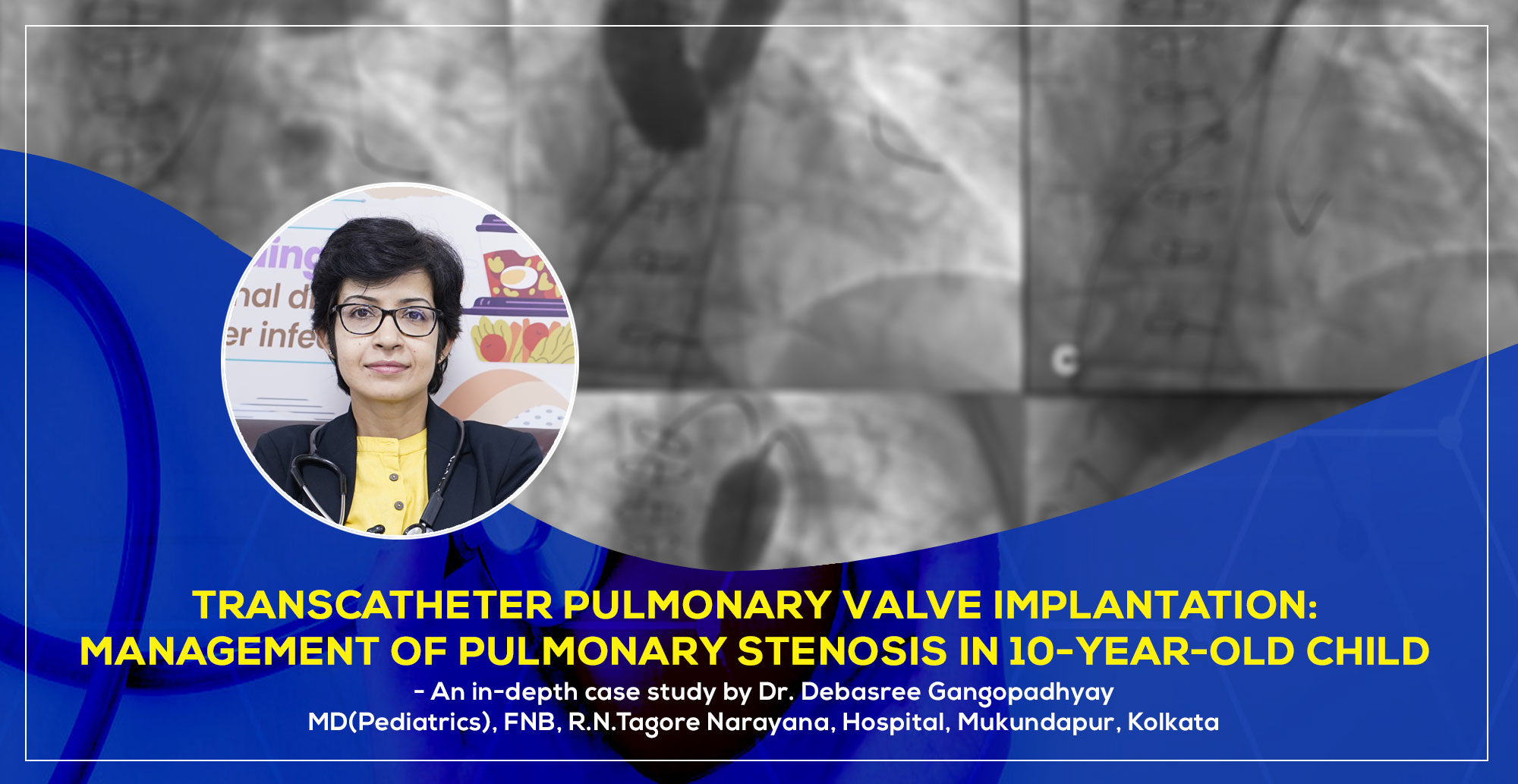
This case study highlights the journey of a 10-year-old child diagnosed with severe pulmonary stenosis and successfully treated with transcatheter pulmonary valve implantation (TPVI), a breakthrough in pediatric cardiology and interventional cardiology.
Initial Symptoms
A 10-year-old boy was brought to the pediatric cardiology unit of a reputed hospital by his parents due to complaints of fatigue, shortness of breath, and occasional dizziness. He underwent open heart surgery for Tetralogy of Fallot at 1 year of age. Over the past few months, his activity levels had significantly decreased. He also complained of episodes of palpitationsand dizziness.
Diagnosis
After a thorough clinical examination and imaging tests,it was diagnosed that the child had a prominent systolic murmur.
Diagnostic Tests Conducted
- Echocardiography, which confirmed moderate pulmonary valve stenosis and severe valve regurgitation.
- Cardiac MRI and CT scan, which provided a detailed assessment of the valve structure and right ventricular function.
- Heart catheterization, to confirm the hemodynamics necessitating intervention.
Line of Treatment (LOT) for TPVI
The specialized doctors team evaluated the implementation of the transcatheter pulmonary valve implantation (TPVI) procedure.
What is Transcatheter Pulmonary Valve Implantation (TPVI)?
TPVI is a minimally invasive procedure where a bio-prosthetic valve is placed within the native pulmonary valve using a catheter-based approach.
Benefits of TPVI over open-heart surgery:
- Reduced recovery time
- No need for chest incision
- Suitable for high-risk surgical candidates
Here is step-by-step TPVI implementation:
Step 1: Medical Management with Heart Failure Medications
Before the intervention, the patient was managed with some medications for fluid overload management, improvement of right ventricular function etc.
Step 2: Preoperative Planning
- Detailed imaging studies to assess valve anatomy.
- Evaluation of the child’s overall health status.
- General anesthesia was performed for the procedure.
Step 3: Transcatheter Valve Deployment
- The child was prepped under general anesthesia.
- A catheter was inserted through the femoral vein and guided into the pulmonary valve area.
- A bioprosthetic valve was implanted using a catheter-based approach.
- The valve expanded, ensuring proper blood flow without open-heart surgery.
Step 4: Post-Intervention Monitoring
- Regular echocardiograms to assess valve function.
- Angiography and echocardiography were performed to confirm proper placement.
- MRI scans for right ventricular performance.
Step 5: Recovery and Postoperative Care
- The child was monitored in the ICU for 24-48 hours.
- Medications were prescribed to prevent clot formation.
- Regular follow-up visits were scheduled.
Success Story of the Patient
Within weeks of TPVI, the child showed remarkable improvements:
- Increased activity levels and no more shortness of breath.
- Disappearance of cyanosis.
- A follow-up echo showed a well-functioning pulmonary valve with normal blood flow.
Conclusion
TPVI has revolutionized the management of congenital heart disease, providing a minimally invasive alternative to open-heart surgery. This case highlights the effectiveness of interventional cardiology in improving quality of life for pediatric patients.
- What are the risks associated with TPVI?
Risks include valve migration, infection, or restenosis. - How long does the implanted valve last?
TPVI valves usually last 10-15 years before requiring replacement. - Can a child live a normal life after TPVI?
Yes, most children return to normal activities with minimal restrictions. - Is TPVI better than open-heart surgery?
It’s less invasive, has a shorter recovery time, and is preferred for suitable cases. - How often are follow-up visits needed?
Initially, every 3-6 months, then annually for long-term monitoring.
Read Also: Case Study: Chronic Mitral Valve Regurgitation in 14-Year-Old Due to Rheumatic Heart Disease

Dr. Debasree Gangopadhyay is a highly respected pediatric cardiologist based in Kolkata, India, specializing in the diagnosis and treatment of heart conditions in children. With a compassionate approach and a commitment to excellence, Dr. Gangopadhyay has made significant contributions to the field of pediatric cardiology. Her expertise includes managing congenital heart defects, arrhythmias, and other cardiovascular conditions in young patients. Dr. Gangopadhyay is dedicated to providing personalized care and staying updated with the latest advancements in pediatric cardiology. She is passionate about educating families on heart health and actively participates in research and community outreach programs.
Comments are closed